
Loading the latest stories…
When Dawn bought her first antique friend in need book, she was attracted to its sweet, sewing-themed pockets, which are finished with braid trim on the pocket flap edges and labeled for the various contents held inside.
Dawn Cook Ronningen2 min read
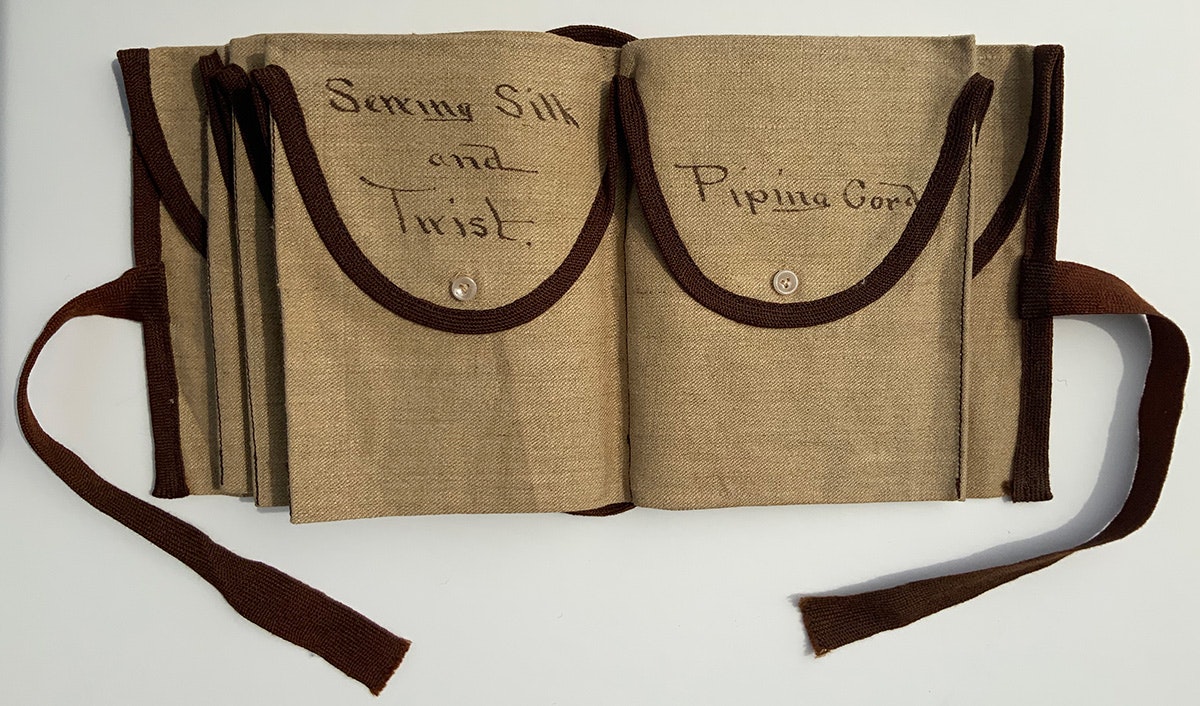
The cover reads, “A Friend in Need,” a touching phrase that piqued my interest, and the little linen book is only 5 inches (12.7 cm) long. I found it in a box of assorted linens at a sale. Each page of the book is actually a bound pocket with a button-down flap, and each flap is marked with the name of a sewing notion. As with anything in my collection, I had to know more!
The Woman’s Exchange Movement, established in 1832, was founded to further economic opportunities for women. The public was encouraged to shop at the organization’s depots, and the outlets provided a place for women to sell their handwork. If the quality of a woman’s work met with a depot’s approval, then a woman could make and sell items to earn her own cash. In Table Talk (1889), the Philadelphia chapter suggested a friend in need book large enough to carry an “outings supply” sold well.
Ladies Home Journal and Practical Housekeeper Volume 6 No. 1, December 1888 on page 9, refers to friend in need books as newer versions of a housewife or sewing roll. I suspect that the book’s form of storage, the buttoned pocket, was thought to be better than the roll’s pocket storage. The pattern in the Ladies Home Journal and Practical Housekeeper advises using linen fabric but also provides alternative fabric suggestions from dainty to expensive. The volume advises binding all of the pocket flaps in red silk braid and labeling the individual pockets with the contents: thread, tape, cotton, elastic, needles, pins, buttons, sewing silk, and scissors. The letters could be inked on or embroidered. Briar stitch, also known as double-feather stitch, was recommended for the binding edge.
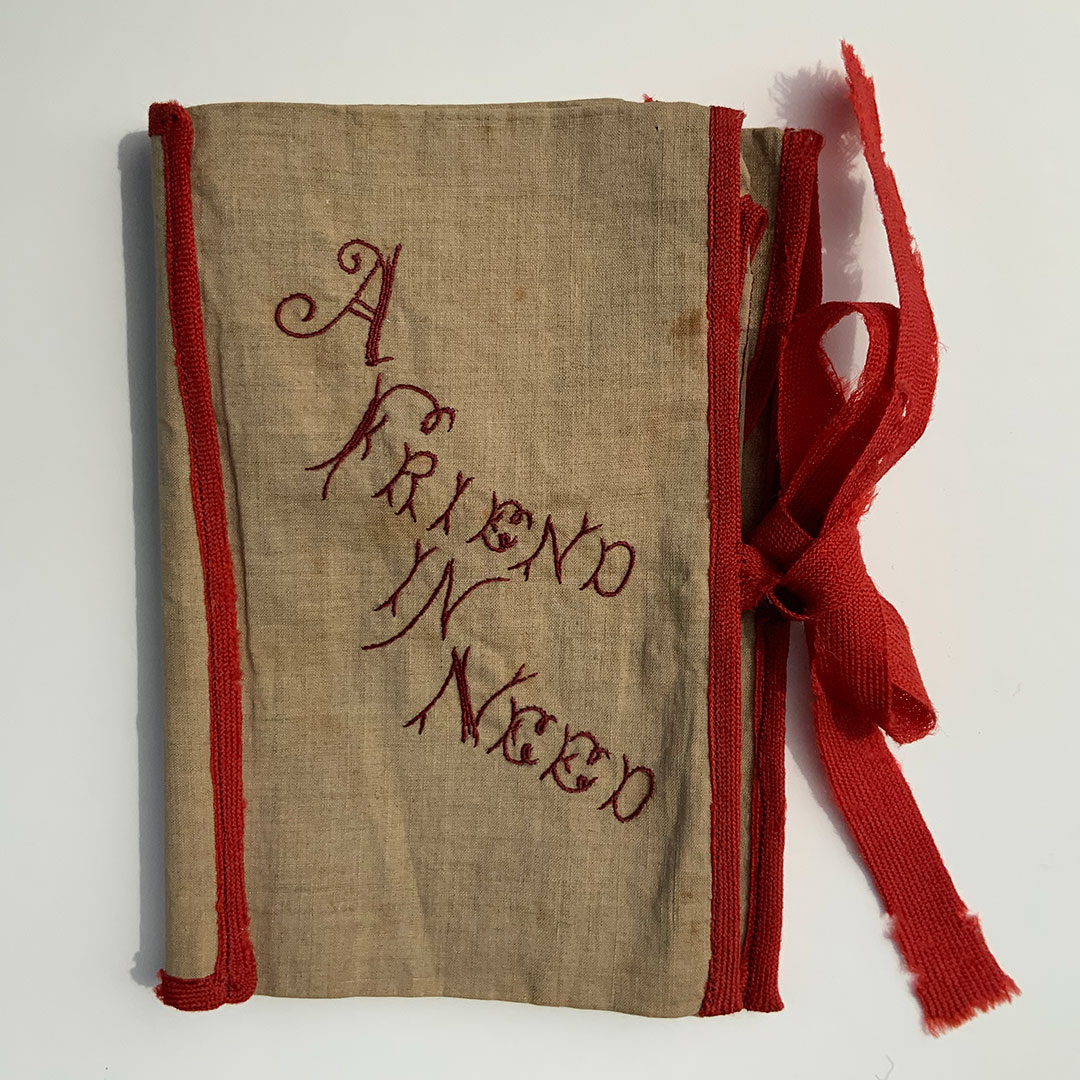
Linen friend in need book with red braid binding and red embroidered letters. This example includes 8 pockets with button flaps and measures 6 x 4 x 2 inches (15.2 x 10.2 x 5.1 cm). Collection of the author.
Peterson’s Magazine, Volume 97–98 from 1890 provided readers, in only ten sentences on page 294, with the complete pattern to make a friend in need. The details were left to readers and their previous sewing experience. The suggested material was a 36 x 12½ inch (91.4 x 31.8 cm) piece of linen, and the text included folding instructions and labeling suggestions. This could be why we see some variation in the finished examples.
In my collection, I note hand-stitched buttonholes, three-hole buttons, and alternate binding materials, such as silk ribbon. The pocket flaps vary from rounded to pointed. Some of the wording was inked, and in other examples, it was embroidered by hand.
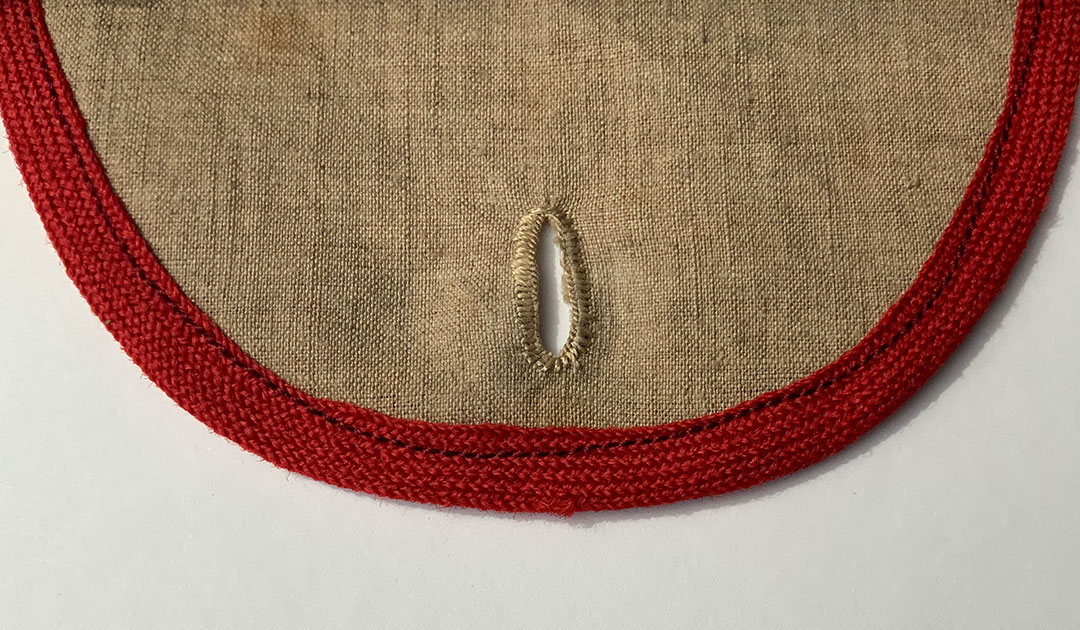
Detail of the flap with hand-stitched buttonhole and knitted-braid binding. Collection of the author.
If I were to make a friend in need book for myself, I’d make it sized for an “outings worth.” I would bind it in red and embroider labels for embroidery supplies: scissors, threads, needles, needle threader, needle minder, counting pins—and chocolate!
Dawn Cook Ronningen is the author of Antique American Needlework Tools (Schiffer 2018). She lives in Minnesota, where she enjoys her extensive collection of antique textiles, embroidery, and needlework tools.
More from PieceWork
 Discover a Digital Home for Knitting and Crochet HistoryThe Center for Knit and Crochet is building a free, open-access digital museum where collections big and small, famous and personal, finally have a home. Jennifer Lindsay · July 20, 2026
 Hooked on History: The Surprising Collection of Hamilton House RugsA visit to a historic mansion in Maine revealed an unexpected collection of hooked rugs that inspired this dazzling rug-hooking project in PieceWork.Karen Elting Brock · July 16, 2026
 Honiton Lace: One of England’s Loveliest LacesExplore the history of this British bobbin lace with a pattern to try yourself, plus a bonus deep dive into a Bucks Point lace edging.Jo Ann Eurell · July 13, 2026
 Long Thread Podcast: Loretta Pettway Bennett, Gee’s Bend QuilterSeason 15, Episode 2: A fifth-generation quilter from the legendary community of Gee’s Bend, Alabama, Loretta Pettway Bennett turns well used cloth into her own expressions of color and community.Anne Merrow · July 11, 2026
 Explore Our Cabinet of Wonders! Discover textile treasures from museums around the world in our Fall 2026 issue of PieceWork.Karen Elting Brock · July 9, 2026
 Flower Power! Vintage Flowers Made SimpleFrom fabric blossoms to daisy loom flowers, learn how to make your own little garden with these vintage techniques. Karen Elting Brock · July 6, 2026
 And He Called It MacaroniIf you’ve ever wondered at the meaning behind the lyrics of “Yankee Doodle,” it might surprise you to learn that the “macaroni” in the song referred not to a noodle, but to a rather odd fashion trend.Christina Garton · July 2, 2026
 Stitching America’s Story: A 500-Foot Quilt for the Nation’s 250th BirthdayAs our nation approaches its 250th birthday, learn about one quilt that aims to stitch together the stories, struggles, and triumphs that built America.Erin Rodewald · June 29, 2026
 The Sparkle of Tradition: How Nineteenth-Century Europe Perfected Knitting with BeadsFrom the Baltics to Britain, learn how nineteenth-century knitters transformed simple wrist warmers and sleeves into dazzling garments with hundreds of tiny glass beads —and get the pattern to knit your own!Carol Huebscher Rhoades · June 25, 2026
 Stitching a Tribute and a MemoryWhat do we do with needlework heirlooms that we cannot let go?Linda Ligon · June 22, 2026
From the Library

Comments
No comments yet — be the first to share your thoughts.
Sign in to join the conversation — commenting is for signed-in members.