
Loading the latest stories…
Wool felt is a natural insulator, making it the perfect fabric for shepherds’ cloaks in the mountainous regions of Turkey. Its strength and resistance to wear and tear make it a sensible base for the beautiful embroidered rugs of northern India.
Piecework Editorial Staff2 min read
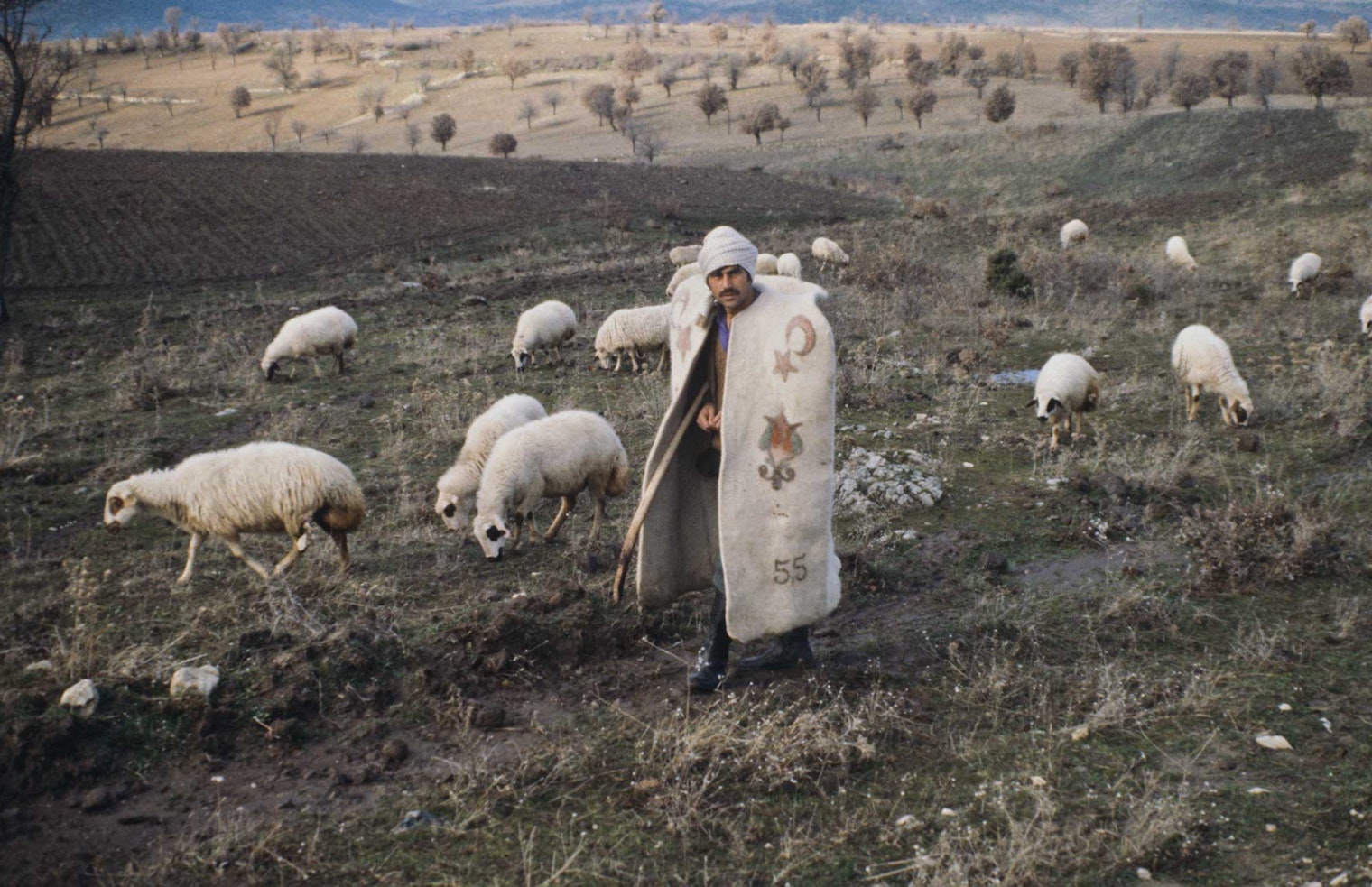
In her Winter 2022 PieceWork article, “Felting: Wool’s Superpower,” textile conservator Isabella Rossi writes about the science, history, and uses of wool felt. Isabella specifically highlights two cultures that create and use felt textiles: shepherds in Turkey, who wear felted wool cloaks known as kepenek, and artisans in the region of Kashmir in northern India, who make felted and embroidered rugs called namda. Here, we explain a bit about how these important and useful wool textiles are made.
 The wool for a kepenek is spread out on a large straw mat and teased with sticks until it spreads evenly (left). A man adds colored felt letters to the front of a coat (right). Photographs by Josephine Powell, from Josephine Powell Slides Collection, ©Suna KıraçLibrary/Koç University, Turkey
The kepenek is a traditional oversized shepherd’s cloak worn in Turkey and the surrounding area. Artisans use a wet-felting technique of rolling the wet wool, which is usually white, in a large straw mat until it’s felted. Colorful motifs representing the maker, guild, or owner are added to the chest area of the garment by adding colored wool onto the white during the felting process, embedding the design into the felt of the kepenek. The resulting garment is a waterproof cloak that’s large enough to be used as a tent if a shepherd finds it necessary to sleep outside with the flock.
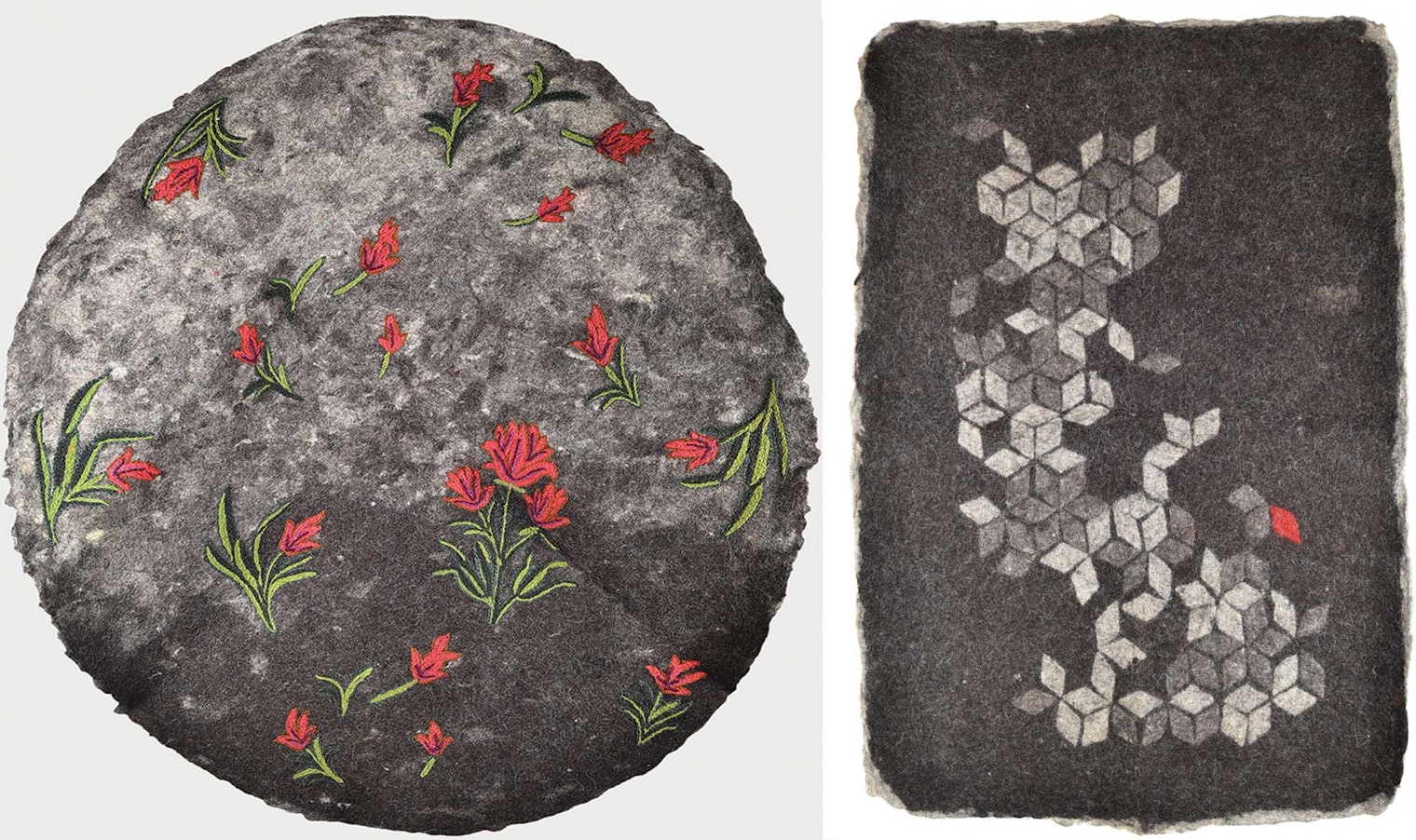
Contemporary examples of the namda, created using the traditional process of felting. Embroidered designs have been added to the rug on the left after felting; the rug on the right has had geometric patterns embedded during the felting process. Courtesy of Commitment to Kashmir (CtoK); these and others are available for sale on their website at zainabyctok.com.
Namda are the felted and embroidered rugs made in the region of Kashmir in northern India, usually from white wool. The Kashmiri process is similar to that used to make the Turkish kepenek.
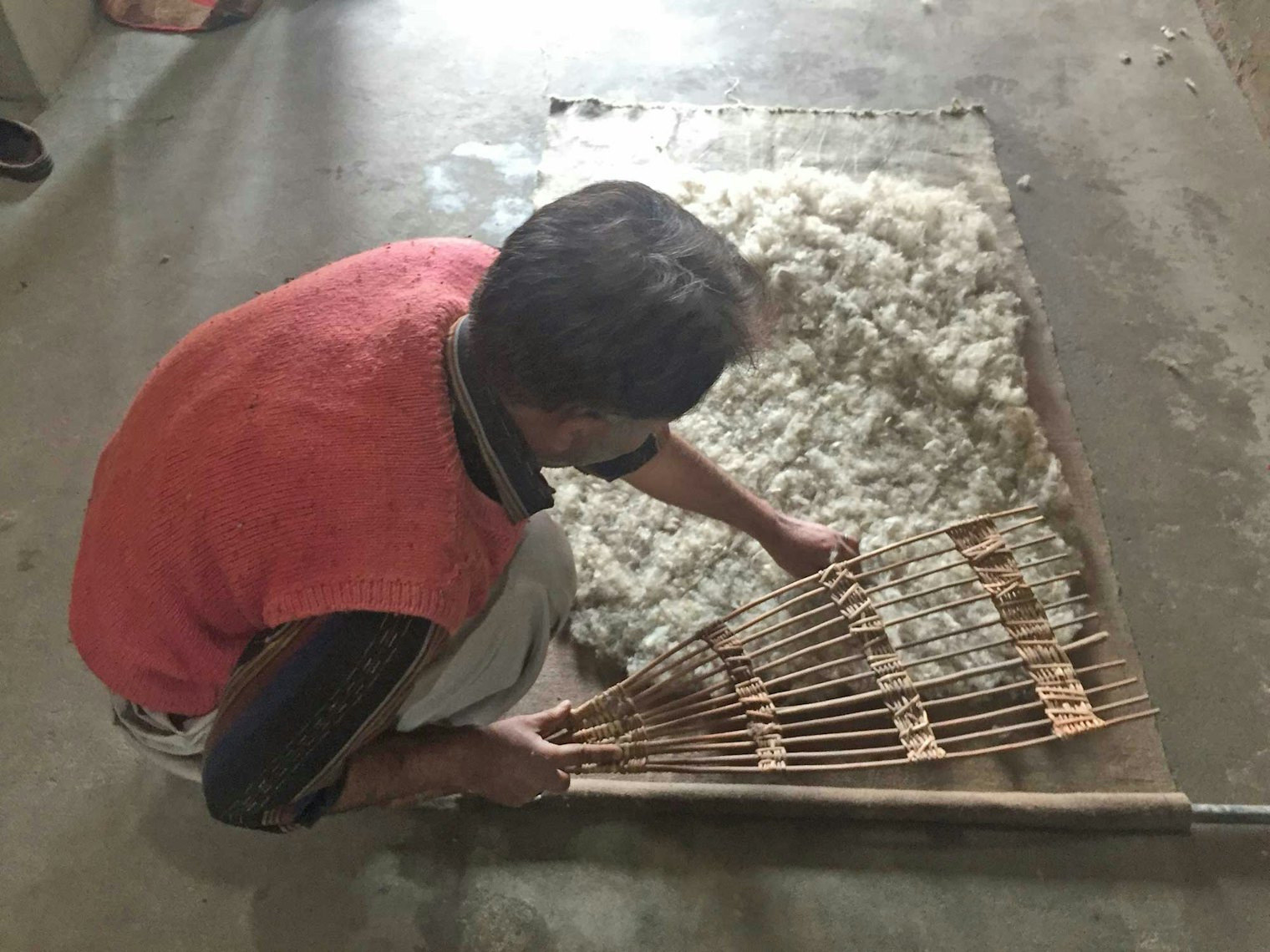
A man is shown fluffing the wool with a stick as the first step of the rug-making process. Courtesy of Commitment to Kashmir (CtoK)
To begin, the loose wool fiber is placed on burlap and fluffed with a stick, then covered with water and soap.
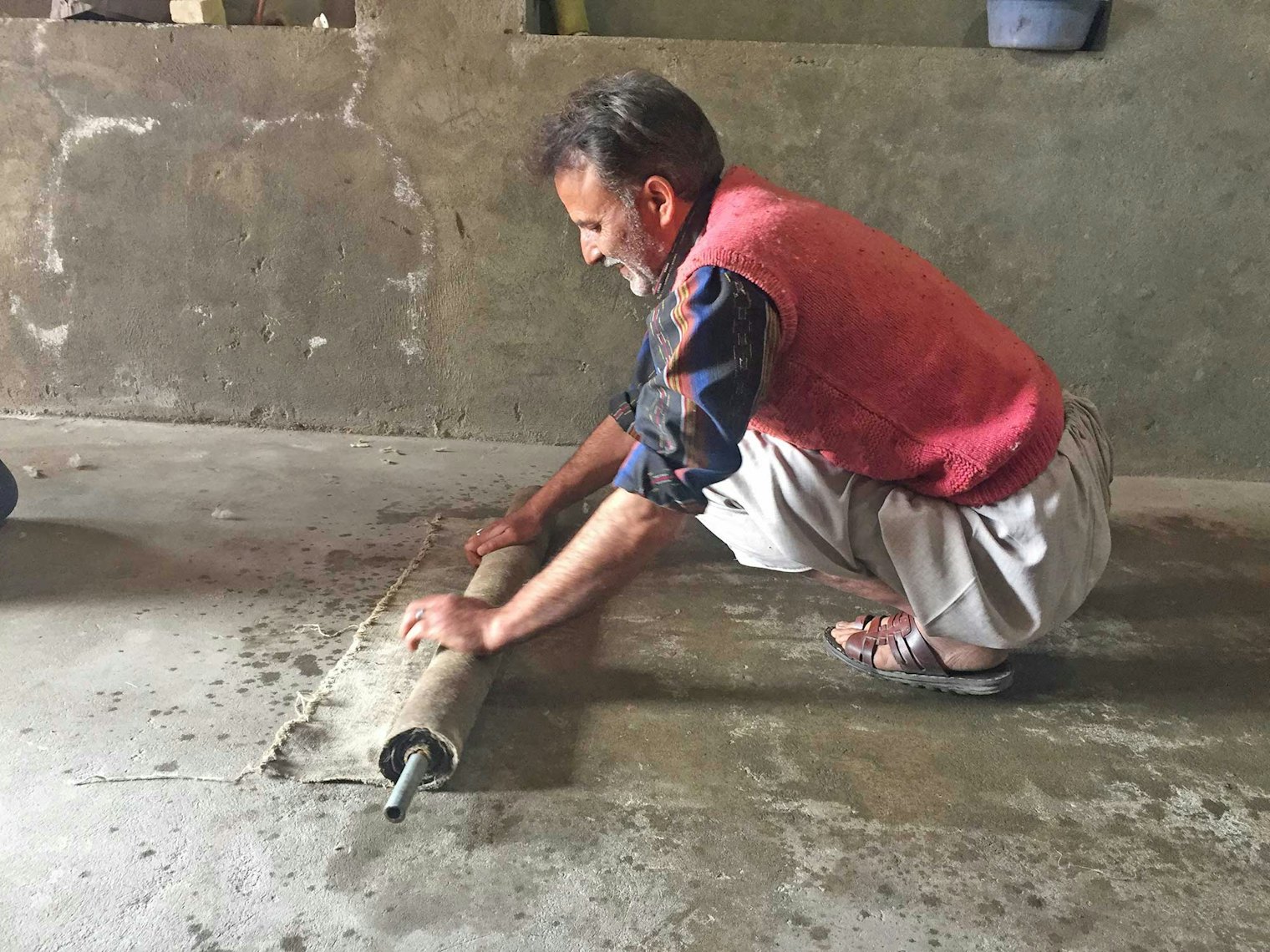
A man is shown rolling the wool as part of the felting process. Courtesy of Commitment to Kashmir (CtoK)
The wool is then rolled and kneaded until it has felted. Traditionally, the felt is then embroidered using colorful wool yarn to create botanical, animal, and geometric designs.
Parts of this article have been excerpted from Isabella Rossi’s article, “Felting: Wool’s Superpower.” To read the full article, check out PieceWork Winter 2022.
Thank you to KOC University, a nonprofit university in Turkey, for the images of the kepenek and to Commitment to Kashmir for the images of the namda. Read how they support a young generation of craftspeople and artisans from Kashmir to become Independent and sustainable entrepreneurs at ctok.org.in.
More from PieceWork
 Long Thread Podcast: Emily Whitted, Texile HistorianSeason 15, Episode 3: Exploring collections of early American cloth, Emily Whitted finds stories of creativity, virtue, and the intimate lives of people from many backgrounds.Anne Merrow · July 28, 2026
 Long Thread Podcast: Loretta Pettway Bennett, Gee’s Bend QuilterSeason 15, Episode 2: A fifth-generation quilter from the legendary community of Gee’s Bend, Alabama, Loretta Pettway Bennett turns well used cloth into her own expressions of color and community.Anne Merrow · July 11, 2026
 From Ticking to Treasure: Reimagining Victorian Embroidered CasesStitch and sew a charming embroidered-ticking bag based on an 1863 pattern.Colleen Formby · May 21, 2026
 Long Thread Podcast: Curtis Gregory, George Washington Carver National MonumentSeason 14, Episode 5: Best known for his work with peanuts, renowned agricultural scientist George Washington Carver had a lifelong passion for needlework. Park Ranger Curtis Gregory shares stories about Carver’s interests in handwork and natural dyeing. Anne Merrow · April 4, 2026
 The Modern Language of TattingWhile the core of the craft has remained the same, the language of patterns has evolved over time.Katrina King · March 30, 2026
 Ceremonies and Celebrations: PieceWork Call for Submissions Spring 2027We're seeking articles and projects that illuminate the role of needlework in ceremonies and celebrations, from wedding finery to ritual textiles.
Karen Elting Brock · March 23, 2026
Ceremonies and Celebrations: PieceWork Call for Submissions Spring 2027We're seeking articles and projects that illuminate the role of needlework in ceremonies and celebrations, from wedding finery to ritual textiles.
Karen Elting Brock · March 23, 2026 Discover an Irish Crochet Masterpiece and One Woman's Journey from Hardship to LegacyLearn the story of a determined dressmaker and her daughters and their precious Irish lace wedding jacket from 1881.Lowanne E. Jones · March 12, 2026
 Mark Twain’s Invention: The Surprising Origin of the Modern Bra StrapDiscover Mark Twain's contributions not only to the literary world, but also to fashion history. Mimi Seyferth · March 2, 2026
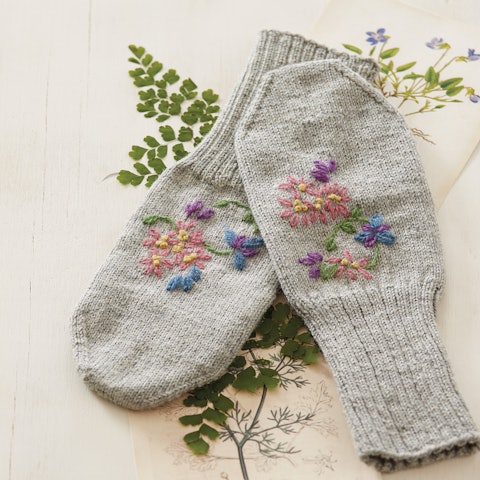 Mittens of Memory: Beauty and Resilience in Wartime AmericaA pair of hand-embroidered mittens from a World War II relocation camp serve as a testament to resilience and the sustaining power of craft. And you can make them, too.Susan Strawn · January 26, 2026
 Long Thread Podcast: Elena Kanagy-Loux, Lacemaker & Historian (classic)Season 13, Episode 9: Ethereal, durable, ornamental, powerful—what does lace mean to you? Through academic study and the work of her hands, Elena Kanagy-Loux teaches that lace is all of these things and more.Anne Merrow · January 10, 2026
From the Library


Comments
No comments yet — be the first to share your thoughts.
Sign in to join the conversation — commenting is for signed-in members.