
Loading the latest stories…
We’re launching a new monthly series spotlighting inspiring exhibitions and collections. First up is "On Loss and Absence: Textiles of Mourning and Survival." Come along as we visit the galleries.
Karen Elting Brock4 min read
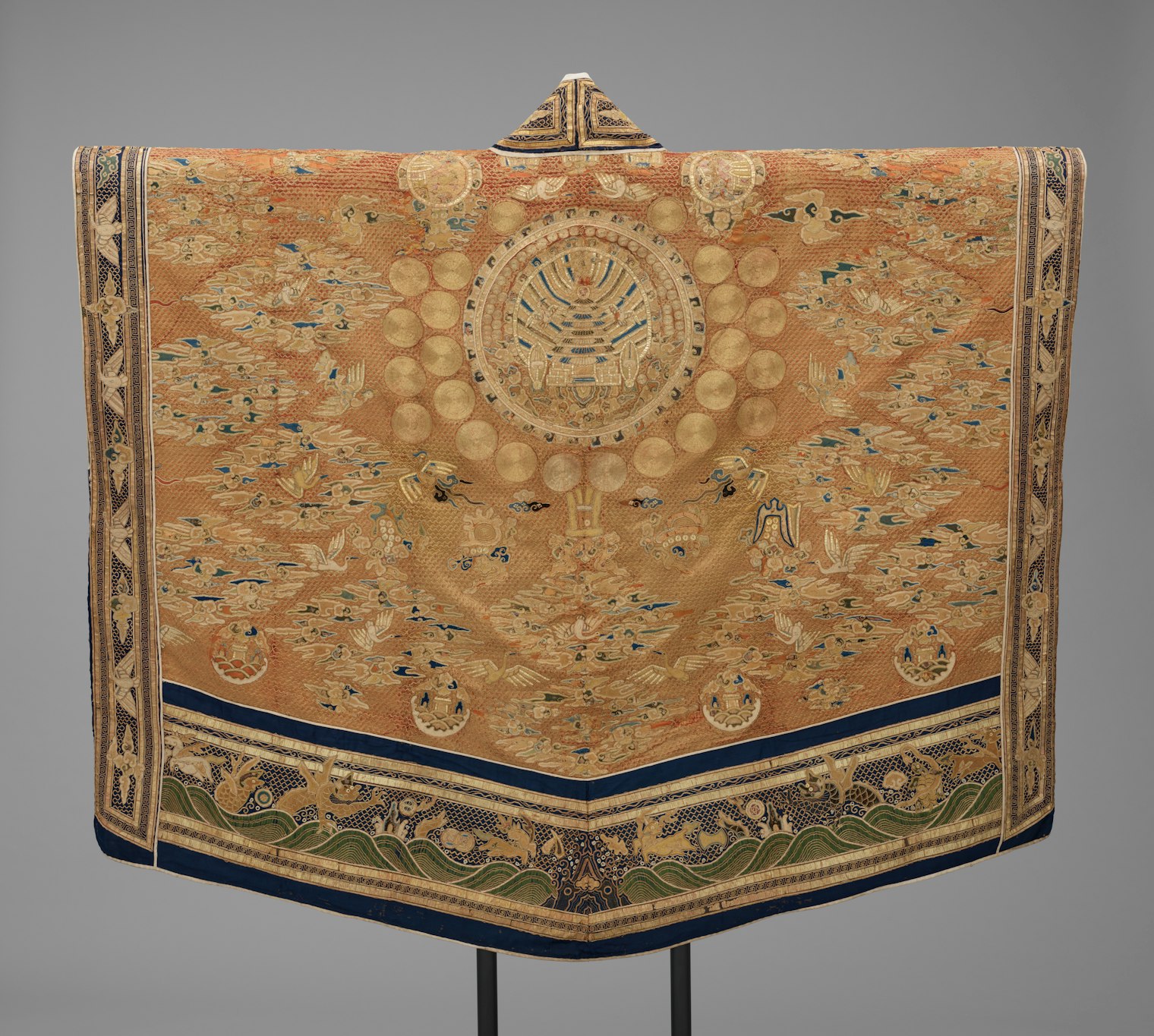
The early years of PieceWork magazine included a column titled “A Place to Come To: Where to See Skilled Handwork.” Editors and contributors invited readers to join them as they explored exhibitions from handwork collections far and wide. The very first place to come to, in the March/April 1993 issue, was the small Litchfield Historical Society in Connecticut—still going strong, by the way. Over the years we readers traveled along from Nebraska’s Stuhr Museum of the Prairie to the Poldi Pezzoli Museum in Milan, Italy, and from the Folk Museum in Asheville, North Carolina, to the needlework mother lode at the Victoria and Albert Museum in London.
I loved these invitations to visit an exhibition, to be connected to and learn from a specific place and moment in time, pleased or startled at the relevance to my own life. As a tribute to those early columns of PieceWork and to historical societies, museums, and handwork collections around the world, I wanted to update “A Place to Come To.” Starting off the first of this new monthly series is an exhibition at the Art Institute of Chicago: On Loss and Absence: Textiles of Mourning and Survival. It seemed appropriate as we prepare to honor, or celebrate, that time of year when the veil may be thinnest between the living and the dead.
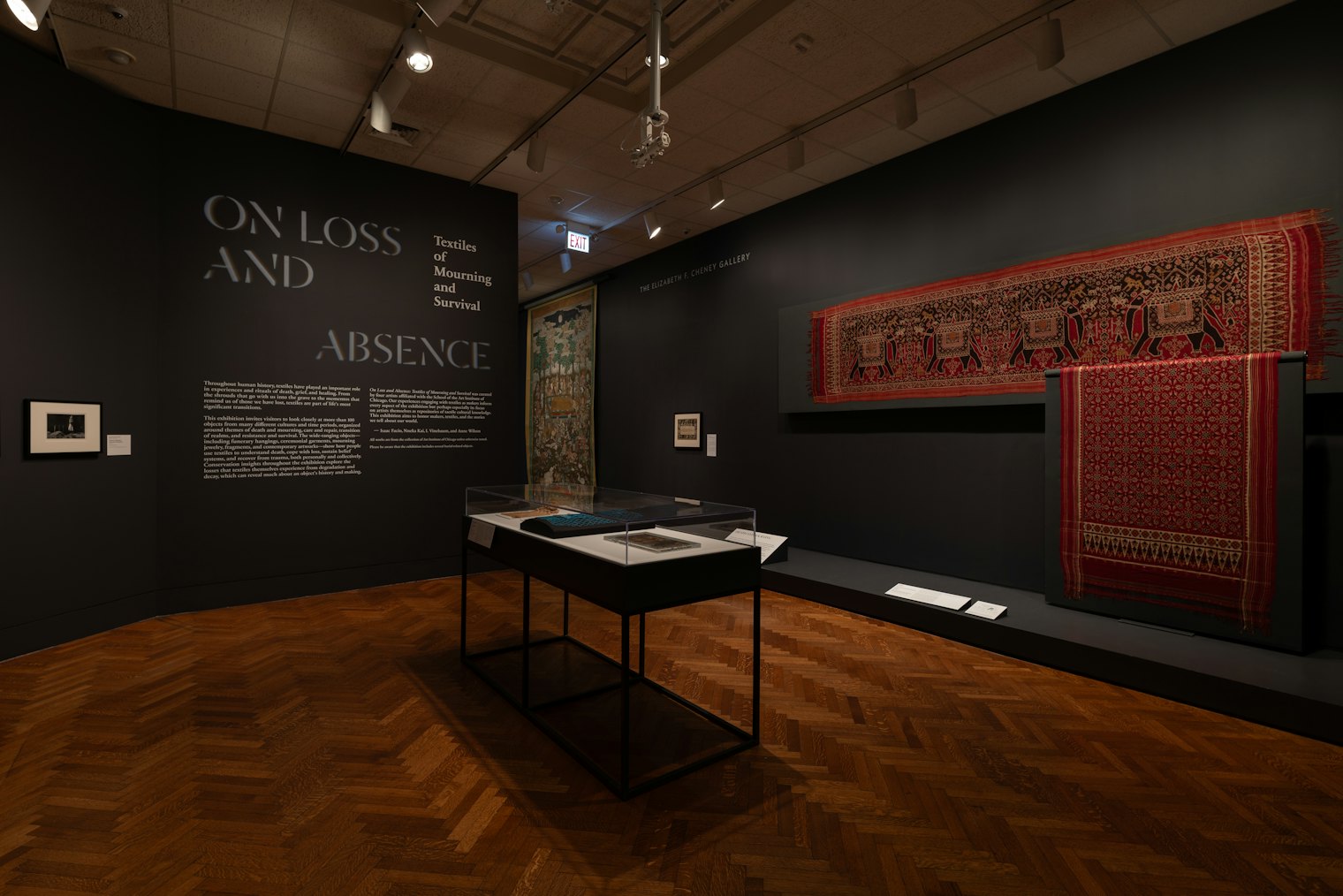
On Loss and Absence: Textiles of Mourning and Survival was curated by four artists affiliated with the School of the Art Institute of Chicago. The Institute holds one of the most significant textile collections in the country, spanning 5 continents and 3,000 years. Drawing mostly from this collection, the exhibition presents more than 100 objects from diverse cultures and time periods, from ancient fragments to contemporary artwork, illustrating textiles’ role in life’s most important rites of passage.
The exhibition is organized in four galleries, each with a distinct theme: death and mourning, transition of realms, care, and resistance and survival. Each gallery reveals how textiles have held deep significance in how humans experience death, grief, and healing. From burial shrouds to keepsakes that preserve the memory of those we’ve lost, cloth has been a constant presence in life’s most profound transitions.
 Mourning Sampler, about 1810. Made at Mary Blach’s School, Providence. Silk, satin weave; embroidered with silk, silk chenille, and human hair. 42.2 × 58.8 cm (16 1/2 × 23 1/8 in.)
The Art Institute of Chicago, Department of Textiles Collection. 1971.146
Mourning Sampler, about 1810. Made at Mary Blach’s School, Providence. Silk, satin weave; embroidered with silk, silk chenille, and human hair. 42.2 × 58.8 cm (16 1/2 × 23 1/8 in.)
The Art Institute of Chicago, Department of Textiles Collection. 1971.146
Textiles have long held an important place in rituals of death and mourning. Across cultures, the deceased are often wrapped or clothed in fabric as a way to honor, preserve, and protect them in burial. For the living, textiles can offer comfort and solace in times of loss. Acts of mourning have also inspired distinctive forms of memorial art, such as embroidered mourning samplers and Victorian jewelry that sometimes includes the hair of the departed.
 Ogboni Chief’s Wrapper, early to mid-20th century. Iwo Yoruba; Nigeria. Cotton, indigo dyed; sixteen strips of plain weave; embroidered with wool; edged with cotton fringe
162.5 × 275.6 cm (64 × 108 1/2 in.); Approximate strip: W.: 10 cm (4 in.)
Ogboni Chief’s Wrapper, early to mid-20th century. Iwo Yoruba; Nigeria. Cotton, indigo dyed; sixteen strips of plain weave; embroidered with wool; edged with cotton fringe
162.5 × 275.6 cm (64 × 108 1/2 in.); Approximate strip: W.: 10 cm (4 in.)
In many cultures and belief systems, death is seen not as an end but as a transformation—an entry into a new existence, a rebirth, or a passage to another realm such as the afterlife, paradise, the heavens, or the world of ancestors. The imagery on the Yoruba Ogboni chief’s textile, for example, symbolizes the passage between the physical and spiritual worlds. Whether hung on walls, worn, or used in ritual and ceremonial contexts, textiles have long served to sustain and strengthen connections between different realms and states of being.
 Talismanic Tunic, mid- to late 20th century Djenné or Tombouctou, Mali Handspun cotton, strip weave, pigment, and ink 94 × 81.3 cm (37 × 32 in.) The Art Institute of Chicago, Elizabeth M. Schultz Endowment Fund 2023.3242
In many ways, textiles offer care, comfort, and protection. A blanket brings warmth and reassurance in times of illness, while clothing shields us from the elements and can even serve as spiritual protection, as seen in the talismanic tunic from Mali. In times of grief, everyday textiles can take on deeper significance, becoming cherished reminders of those we have lost.
 Espiral Escalonada Motif Fragment, 200–500
Nasca; south coast, Peru. Camelid wool and cotton, plain weave of discontinuous single interlocking warp and weft, scaffold weave (espiral escalonada, 'stepped-fret' motif)
51.8 × 32.7 cm (20 3/8 × 12 7/8 in.) The Art Institute of Chicago, purchased with funds provided by Mrs. Edwin A. Seipp. 1956.76
Espiral Escalonada Motif Fragment, 200–500
Nasca; south coast, Peru. Camelid wool and cotton, plain weave of discontinuous single interlocking warp and weft, scaffold weave (espiral escalonada, 'stepped-fret' motif)
51.8 × 32.7 cm (20 3/8 × 12 7/8 in.) The Art Institute of Chicago, purchased with funds provided by Mrs. Edwin A. Seipp. 1956.76
Destructive forces like genocide, displacement, and war endanger not only human lives but also cultural practices, artistic traditions, and collective knowledge. This gallery pays tribute to those who, even in the face of such hardship, have preserved and adapted their textile traditions, turning them into powerful acts and symbols of resistance. Both textiles and the skills behind them—like their makers and cultures—survive and thrive.
On Loss and Absence runs through March 15, 2026. Visit the Art Institute of Chicago to learn more about its exhibition and its collection. Visit the PieceWork Library to discover our collection of stories, patterns, and past issues.
Know of an upcoming exhibition we should share? Write to us here! We always love hearing from you.
More from PieceWork
 Long Thread Podcast: Emily Whitted, Texile HistorianSeason 15, Episode 3: Exploring collections of early American cloth, Emily Whitted finds stories of creativity, virtue, and the intimate lives of people from many backgrounds.Anne Merrow · July 28, 2026
 Long Thread Podcast: Loretta Pettway Bennett, Gee’s Bend QuilterSeason 15, Episode 2: A fifth-generation quilter from the legendary community of Gee’s Bend, Alabama, Loretta Pettway Bennett turns well used cloth into her own expressions of color and community.Anne Merrow · July 11, 2026
 From Ticking to Treasure: Reimagining Victorian Embroidered CasesStitch and sew a charming embroidered-ticking bag based on an 1863 pattern.Colleen Formby · May 21, 2026
 Long Thread Podcast: Curtis Gregory, George Washington Carver National MonumentSeason 14, Episode 5: Best known for his work with peanuts, renowned agricultural scientist George Washington Carver had a lifelong passion for needlework. Park Ranger Curtis Gregory shares stories about Carver’s interests in handwork and natural dyeing. Anne Merrow · April 4, 2026
 The Modern Language of TattingWhile the core of the craft has remained the same, the language of patterns has evolved over time.Katrina King · March 30, 2026
 Ceremonies and Celebrations: PieceWork Call for Submissions Spring 2027We're seeking articles and projects that illuminate the role of needlework in ceremonies and celebrations, from wedding finery to ritual textiles.
Karen Elting Brock · March 23, 2026
Ceremonies and Celebrations: PieceWork Call for Submissions Spring 2027We're seeking articles and projects that illuminate the role of needlework in ceremonies and celebrations, from wedding finery to ritual textiles.
Karen Elting Brock · March 23, 2026 Discover an Irish Crochet Masterpiece and One Woman's Journey from Hardship to LegacyLearn the story of a determined dressmaker and her daughters and their precious Irish lace wedding jacket from 1881.Lowanne E. Jones · March 12, 2026
 Mark Twain’s Invention: The Surprising Origin of the Modern Bra StrapDiscover Mark Twain's contributions not only to the literary world, but also to fashion history. Mimi Seyferth · March 2, 2026
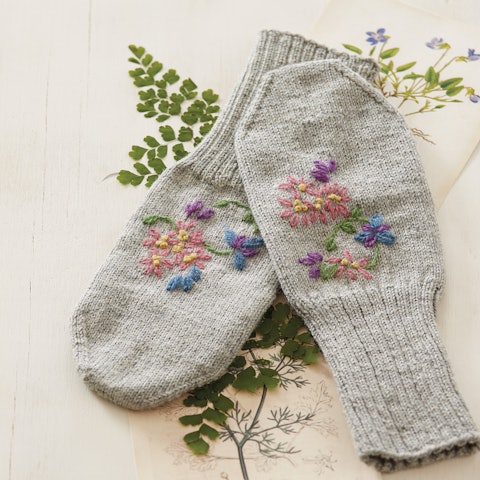 Mittens of Memory: Beauty and Resilience in Wartime AmericaA pair of hand-embroidered mittens from a World War II relocation camp serve as a testament to resilience and the sustaining power of craft. And you can make them, too.Susan Strawn · January 26, 2026
 Long Thread Podcast: Elena Kanagy-Loux, Lacemaker & Historian (classic)Season 13, Episode 9: Ethereal, durable, ornamental, powerful—what does lace mean to you? Through academic study and the work of her hands, Elena Kanagy-Loux teaches that lace is all of these things and more.Anne Merrow · January 10, 2026
From the Library


Comments
No comments yet — be the first to share your thoughts.
Sign in to join the conversation — commenting is for signed-in members.