
Loading the latest stories…
SUBKnitting
Monederos for Your Money
Cynthia LeCount Samaké9 min read
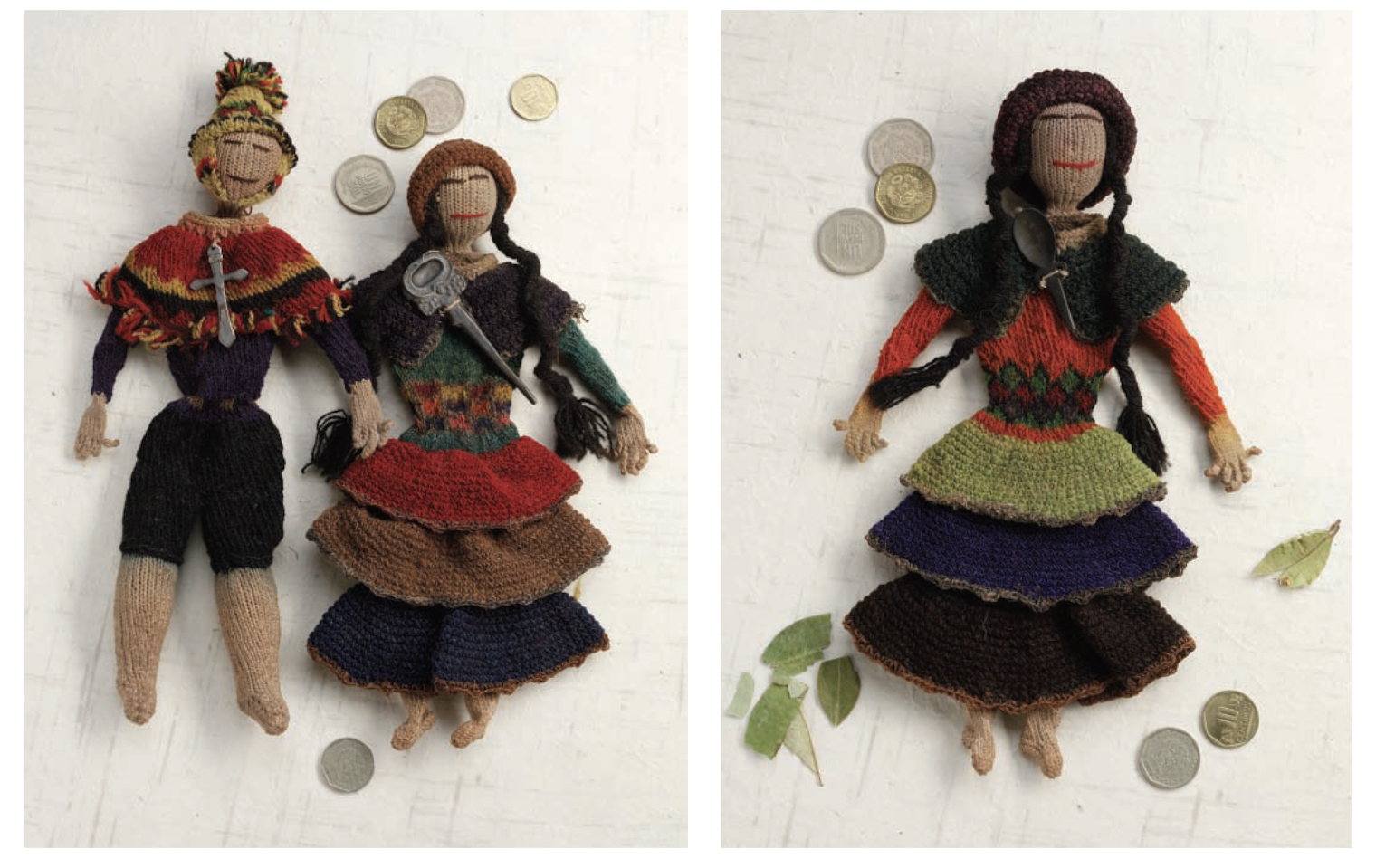
What do a striped fish, a well-dressed woman, a tonsured monk, and an anatomically correct bull have in common? For at least a hundred years, women in Peru and Bolivia have carried all these shapes as fashionable little monederos (coin purses).
Whether intended as ritual funerary objects, garment embellishments, or utilitarian containers, three-dimensional figures have a long tradition in Andean textile history. Two thousand years ago, Paracas women of the south Pacific coast of Peru were making colorful little figures in the needlework technique called cross-looping, considered a precursor to knitting. A magnificent example of their work, the Paracas Textile, a mantle from Paracas, Peru, dated 300 B.C.–A.D. 100, in the collection of the Brooklyn Museum, is edged with a fringe of ninety detailed miniature people and animals (see “Historical Notes and Resources” below).
More from PieceWork
From the Library





Comments
No comments yet — be the first to share your thoughts.
Sign in to join the conversation — commenting is for signed-in members.