
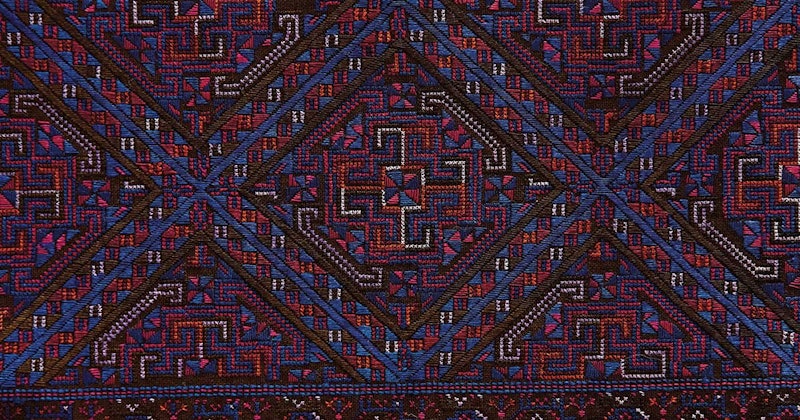
A Journey into Fine Work: PieceWork Fall 2018
Embark with us on a PieceWork journey that celebrates “fine work.” We travel the globe and present examples of especially fine embroidery, knitting, needlepoint, and crochet.
Category
Embark with us on a PieceWork journey that celebrates “fine work.” We travel the globe and present examples of especially fine embroidery, knitting, needlepoint, and crochet.
Crochet is a language unique in needlework. Learning to crochet is like learning a foreign language that uses a different alphabet, a different construction, and a different elemental foundation.
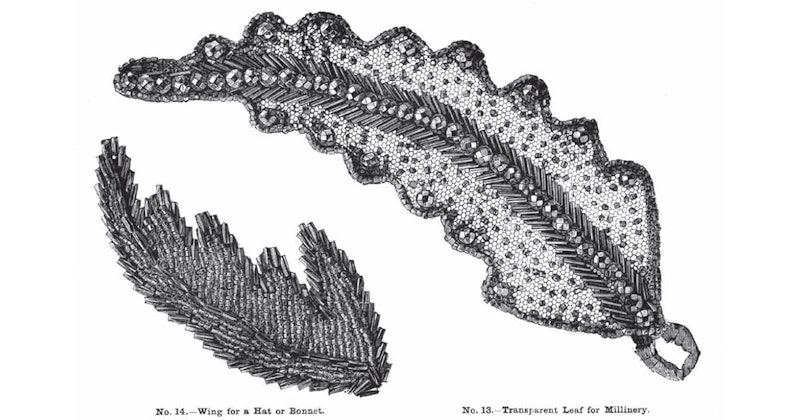
PieceWork’s electronic pattern book Weldon’s Practical Bead-Work, First Series, opens a window on another time and another place. The time is the turn of the twentieth century and the place is London, England.

February 15, 1820: Suffragette extraordinaire (and lace enthusiast) Susan B. Anthony is born.

Traquair House is renowned for its collection of embroideries, which were stitched by needlewomen whose descendants still live in the house today.
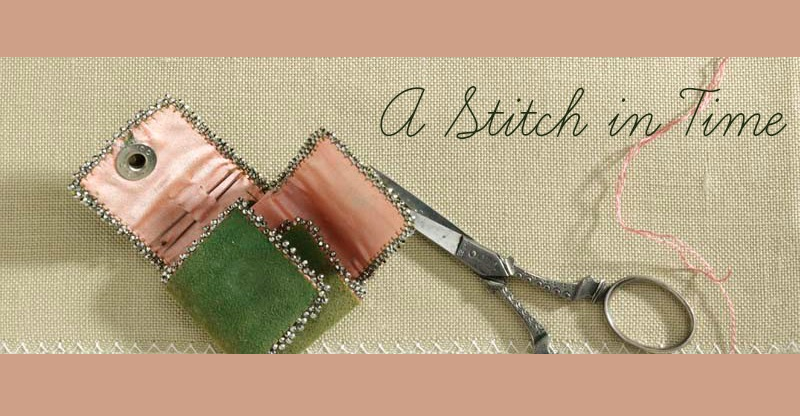
The tête de boeuf stitch is commonly referred to as head of the bull, although a direct translation from the French is “head of beef” stitch, and it also goes by the names of ox head and detached wheat ear.
The knitting stitch, a double row of straight stitches slanting in opposite directions, forms a solidly stitched, braidlike pattern on a canvas or fabric surface, and resembles true knitting.
The versatile Vandyke or Van Dyke stitch is a variable-width stitch with a distinctive, centrally raised plait or braid. It is rather unique among embroidery stitches because it does not have multiple names.
Named for the lovely Italian city of Siena, the Sienese (Siennese) stitch is an easy, wide-line stitch in the generic looped-stitch family.
Surprisingly, the upright cross-stitch, which resembles the common plus sign, has been either ignored or overlooked in many reference books on needlework stitches.
The feather stitch and its countless variations create feathery straight or undulating lines and fall in the category of looped stitches.
The Cretan stitch derives its name from Crete, the largest Greek island in the Mediterranean Sea, home to one of the oldest civilizations (dating from at least the time of Homer’s Odyssey, around the eleventh century b.c.) and a rich legacy of embroidery.