
Knitting Traditions 2018: Schiaparelli's Shawl
What’s not to love about Schiaparelli's Shawl? Fun stripes? Check. Super-easy lace? Check. Speckled-but-not-too-speckled yarn? And check.
Category
What’s not to love about Schiaparelli's Shawl? Fun stripes? Check. Super-easy lace? Check. Speckled-but-not-too-speckled yarn? And check.
This lightweight but warm piece is everything I look for in a cardigan: it’s figure-flattering but not skin-tight, comfortable, and versatile, and it has interesting details that make it fun to knit and wear.
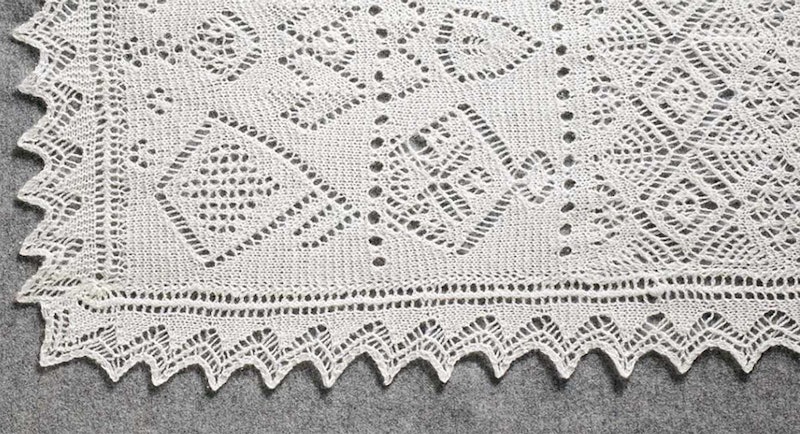
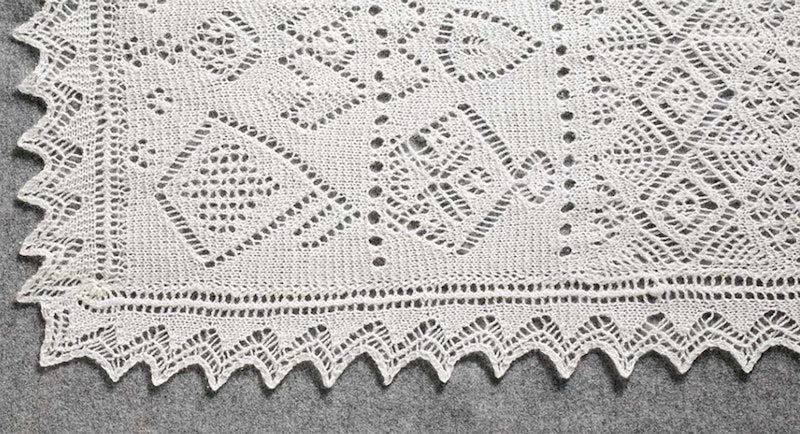
In 2005, the owner of a damaged shawl asked Margaret Stove to restore the family heirloom as closely as possible to its original state.
This mitten pattern is based on a pair of Sami mittens I saw in Lulea, Sweden, at the Norrbottens Museum.
Crochet is a language unique in needlework. Learning to crochet is like learning a foreign language that uses a different alphabet, a different construction, and a different elemental foundation.
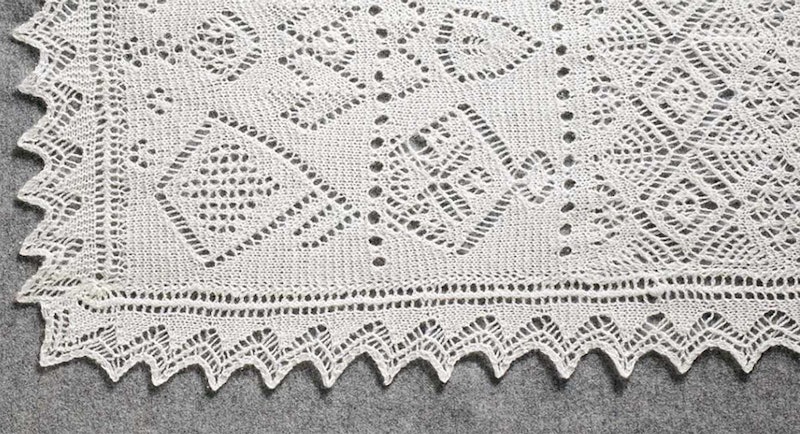
For an example of knitting that would have been done in the last two decades of the nineteenth century, the Victorian era, we asked Carol Huebscher Rhoades to knit the Double Rose-Leaf pattern for us.
We offer up another mysterious Victorian knitting project from the pages of Weldon’s Practical Needlework, Volume 1: Knitted Lace or Edging.

Jacqueline Fee recounts how she came to knit the Brewster socks, which were based on an original sock that was brought to her attention by her daughter.
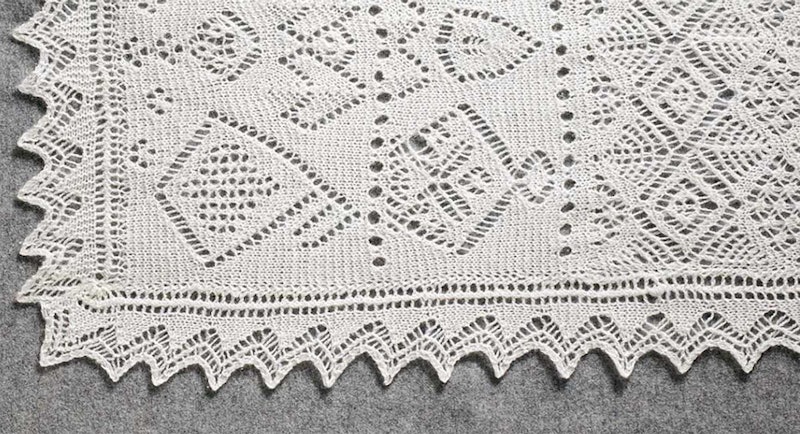
Carol Huebscher Rhoades’s lovely knitted scarf honors Isabella Bird, one of the nineteenth-century’s most extraordinary travelers.
The tête de boeuf stitch is commonly referred to as head of the bull, although a direct translation from the French is “head of beef” stitch, and it also goes by the names of ox head and detached wheat ear.
Surprisingly, the upright cross-stitch, which resembles the common plus sign, has been either ignored or overlooked in many reference books on needlework stitches.
The Cretan stitch derives its name from Crete, the largest Greek island in the Mediterranean Sea, home to one of the oldest civilizations (dating from at least the time of Homer’s Odyssey, around the eleventh century b.c.) and a rich legacy of embroidery.