
Loading the latest stories…
Here are two wooden combs, their handmade components lashed together and decorated with handspun thread. The dark comb, adorned with macaw feathers, came from the Shipibo, a people indigenous to the Ucayali river valley of eastern Peru.
Piecework Editorial Staff2 min read
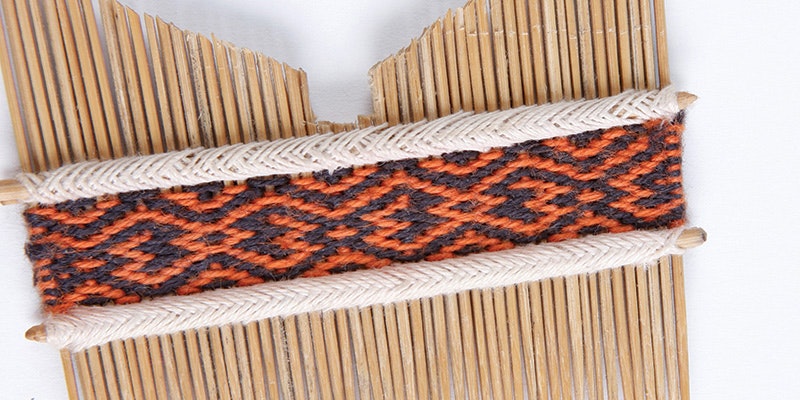
Here are two wooden combs, their handmade components lashed together and decorated with handspun thread. The dark comb, adorned with macaw feathers, came from the Shipibo, a people indigenous to the Ucayali river valley of eastern Peru. The light comb may also be of Shipibo origin or, as the textile researcher Peter Collingwood and others have suggested, may have come from India, where similar combs are produced. Whether they are from the same part of the world or are cases of parallel invention, these combs are ingeniously constructed.

Comb. Maker unknown. Wood and cotton thread. Origin and date
unknown. 2⅞ inches (7.3 cm) long at longest point x 3 inches (7.6 cm) wide. Collection of Linda Ligon. All photos by Ann Swanson.

Comb. Shipibo; maker unknown. Wood, cotton thread, macaw feathers. Peru. Date unknown. 2½ inches (6.4 cm) long x 4½ inches (11.4 cm) wide. Collection of Linda Ligon.</p
The wood of the light comb appears to be bamboo. The threads that hold it together and decorate it are handspun two-ply Z-twist cotton, about the size of buttonhole twist. The light thread is tightly twisted while the decorative threads are more loosely spun and colored with natural dyes.
The teeth of the dark comb are whittled from an extremely hard, dark wood, probably a type of ironwood called quebracho. The binding threads are of handspun two-ply Z-twist cotton that have been stained with a dark mud rich in iron.

Figure A
Although the light comb is more refined, it is also simpler. In The Maker’s Hand: A Close Look at Textile Structures, Collingwood describes the method of lashing the teeth to sticks laid perpendicular to them (see Figure A):
Lay teeth parallel with one holding stick horizontal across them.
Lash teeth to stick.
Work decorative center using two contrasting threads at a time for each row. When a dark thread goes over a certain number of teeth, a light thread goes under those same teeth. One side is the exact color-opposite of the other.
Lash a second holding stick to the teeth.

Figure B
The dark comb is made in essentially the same way, though the lashings are at once simpler and more elaborate, and the central decorative portion is simpler:
Lay teeth parallel with one holding stick horizontal across them.
Lash teeth to stick, working in one direction only (see Figure B).
Lash another stick in place, working in the opposite direction. This creates a herringbone effect. The “seam” between the two rows of lashing is covered with a doubled thread.
Work the decorative center using a single thread, going over different numbers of teeth with each pass to form a twill-like pattern.
Lash two more sticks in place as before. The macaw feathers are attached with a length of thread that has been tightly twisted and folded back on itself to form a sturdier four-ply thread.
The Shipibo men make these combs, often as gifts for women. The decorative lashing technique could have many applications, though. Just imagine.
Find this and other great articles in the July/August 2008 issue of PieceWork.
More from PieceWork
 Long Thread Podcast: Emily Whitted, Texile HistorianSeason 15, Episode 3: Exploring collections of early American cloth, Emily Whitted finds stories of creativity, virtue, and the intimate lives of people from many backgrounds.Anne Merrow · July 28, 2026
 Long Thread Podcast: Loretta Pettway Bennett, Gee’s Bend QuilterSeason 15, Episode 2: A fifth-generation quilter from the legendary community of Gee’s Bend, Alabama, Loretta Pettway Bennett turns well used cloth into her own expressions of color and community.Anne Merrow · July 11, 2026
 From Ticking to Treasure: Reimagining Victorian Embroidered CasesStitch and sew a charming embroidered-ticking bag based on an 1863 pattern.Colleen Formby · May 21, 2026
 Long Thread Podcast: Curtis Gregory, George Washington Carver National MonumentSeason 14, Episode 5: Best known for his work with peanuts, renowned agricultural scientist George Washington Carver had a lifelong passion for needlework. Park Ranger Curtis Gregory shares stories about Carver’s interests in handwork and natural dyeing. Anne Merrow · April 4, 2026
 The Modern Language of TattingWhile the core of the craft has remained the same, the language of patterns has evolved over time.Katrina King · March 30, 2026
 Ceremonies and Celebrations: PieceWork Call for Submissions Spring 2027We're seeking articles and projects that illuminate the role of needlework in ceremonies and celebrations, from wedding finery to ritual textiles.
Karen Elting Brock · March 23, 2026
Ceremonies and Celebrations: PieceWork Call for Submissions Spring 2027We're seeking articles and projects that illuminate the role of needlework in ceremonies and celebrations, from wedding finery to ritual textiles.
Karen Elting Brock · March 23, 2026 Discover an Irish Crochet Masterpiece and One Woman's Journey from Hardship to LegacyLearn the story of a determined dressmaker and her daughters and their precious Irish lace wedding jacket from 1881.Lowanne E. Jones · March 12, 2026
 Mark Twain’s Invention: The Surprising Origin of the Modern Bra StrapDiscover Mark Twain's contributions not only to the literary world, but also to fashion history. Mimi Seyferth · March 2, 2026
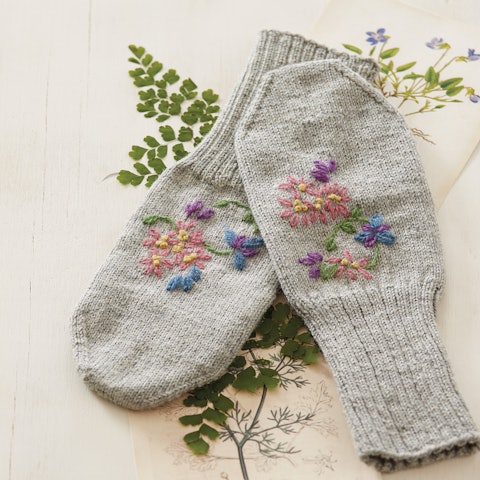 Mittens of Memory: Beauty and Resilience in Wartime AmericaA pair of hand-embroidered mittens from a World War II relocation camp serve as a testament to resilience and the sustaining power of craft. And you can make them, too.Susan Strawn · January 26, 2026
 Long Thread Podcast: Elena Kanagy-Loux, Lacemaker & Historian (classic)Season 13, Episode 9: Ethereal, durable, ornamental, powerful—what does lace mean to you? Through academic study and the work of her hands, Elena Kanagy-Loux teaches that lace is all of these things and more.Anne Merrow · January 10, 2026
From the Library


Comments
No comments yet — be the first to share your thoughts.
Sign in to join the conversation — commenting is for signed-in members.