
Loading the latest stories…
Stitched as a promise of marriage, worn through decades of daily life, and passed down from mother to daughter, Oline Hansen’s embroidered suspenders have carried a family’s history across continents and more than a hundred years.
Mary Polityka Bush2 min read
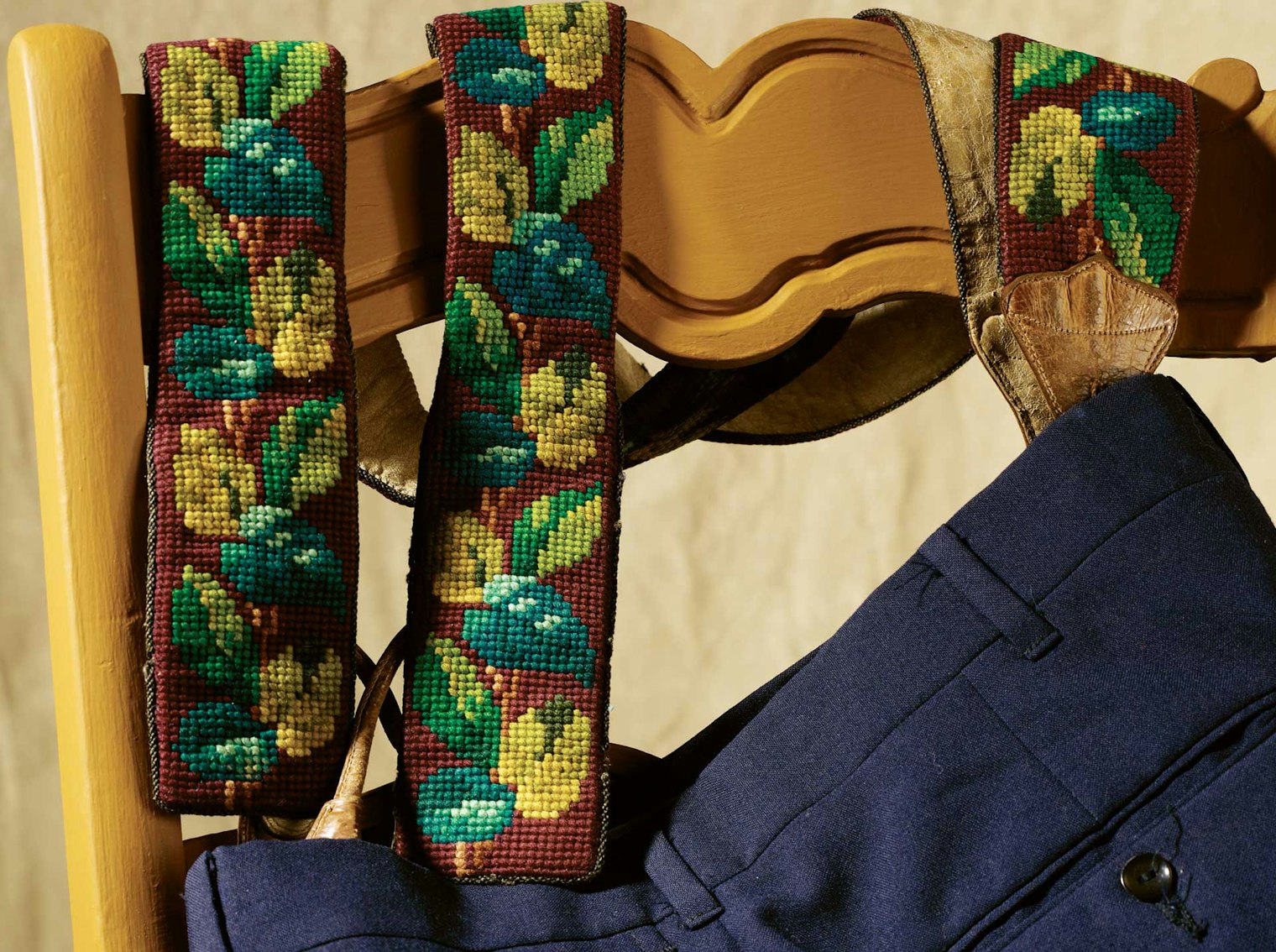
Oline Hansen’s education was typical for a girl in mid-nineteenth-century Fredericia, Denmark: In addition to academic subjects, she was taught “women’s skills”—sewing, mending, embroidery, knitting, and crocheting. By the time she reached marriageable age, Oline had filled a hope chest with enough handmade linens to furnish a proper household for Karl Madsen, the young customs official who wooed her and eventually won her heart. As her engagement gift to him, Oline cross-stitched a pair of suspenders that Karl then mounted on leather. They married in the late 1800s.
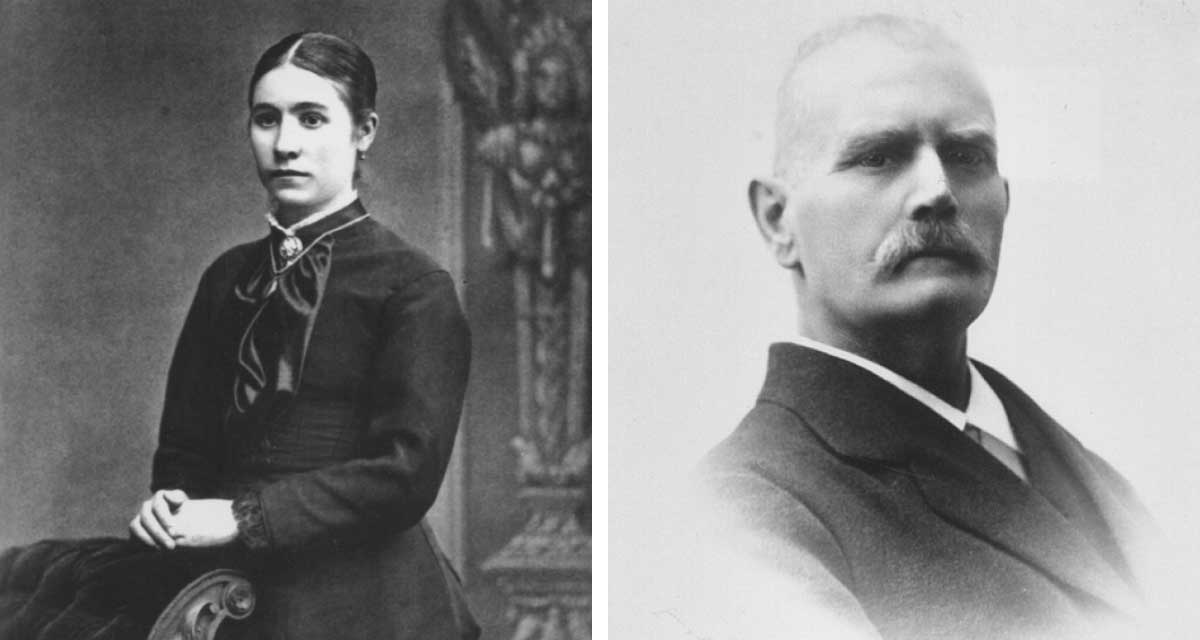
Left: Photograph of Oline Hansen Madsen. Fredericia, Denmark. Photographer unknown. Date unknown. Photographs courtesy of Else Lamba. Right: Photograph of Karl Madsen. Fredericia, Denmark. Photographer unknown. Date unknown.
Today, more than 100 years later, the colors of the repeat design of leaves worked in sixteen different shades of tapestry wool on 10-mesh Penelope canvas are still rich. The suspenders are lined with butter-soft calfskin; tiny hand stitches attach an edging of round braid. Each strip is finished at one end with a single loop of sturdy leather intended to be secured over a button sewn inside punched with five pairs of holes to allow adjustment of the suspenders to accommodate changes in the wearer’s height and girth.
The original design may have been a Berlin-work pattern; worked from color-printed graphs in cross- or tent stitch, Berlin work was a popular form of needlework beginning in the mid-nineteenth century (see “Berlin Work,” PieceWork, March/April 1995). The botanical subject matter and choice of cross-stitch support this supposition; earlier Berlin work tended to have light backgrounds, and so the dark background of this example places it in the latter part of the nineteenth century, the time Oline and Karl were married.
Judging from obvious repairs and missing leather bits, Karl Madsen wore these beautiful suspenders often and for many years. After his death, they were passed along to the couple’s younger daughter, Valborg Sara Simonie Brusch. Her only daughter, Else Lamba, who moved from Denmark and eventually settled in Parkersburg, West Virginia, with her husband in 1965, cherishes them now. Else plans to give them to her daughter, Leah Anjani Lamba, who, like Else, Else’s beloved Mor (mother in Danish) and her Bedstemor (grandmother; literally, best mother), is proficient in many types of needlework.
Interested in learning more about items created for celebrations? The companion project to this article and more can be found in the May/June 2006 issue of PieceWork.
Also, remember that if you are an active subscriber to PieceWork magazine, you have unlimited access to previous issues, including May/June 2006. See our help center for the step-by-step process on how to access them.
Originally published November 20, 2020; updated November 20, 2025.
More from PieceWork
 Discover a Digital Home for Knitting and Crochet HistoryThe Center for Knit and Crochet is building a free, open-access digital museum where collections big and small, famous and personal, finally have a home. Jennifer Lindsay · July 20, 2026
 Hooked on History: The Surprising Collection of Hamilton House RugsA visit to a historic mansion in Maine revealed an unexpected collection of hooked rugs that inspired this dazzling rug-hooking project in PieceWork.Karen Elting Brock · July 16, 2026
 Honiton Lace: One of England’s Loveliest LacesExplore the history of this British bobbin lace with a pattern to try yourself, plus a bonus deep dive into a Bucks Point lace edging.Jo Ann Eurell · July 13, 2026
 Long Thread Podcast: Loretta Pettway Bennett, Gee’s Bend QuilterSeason 15, Episode 2: A fifth-generation quilter from the legendary community of Gee’s Bend, Alabama, Loretta Pettway Bennett turns well used cloth into her own expressions of color and community.Anne Merrow · July 11, 2026
 Explore Our Cabinet of Wonders! Discover textile treasures from museums around the world in our Fall 2026 issue of PieceWork.Karen Elting Brock · July 9, 2026
 Flower Power! Vintage Flowers Made SimpleFrom fabric blossoms to daisy loom flowers, learn how to make your own little garden with these vintage techniques. Karen Elting Brock · July 6, 2026
 And He Called It MacaroniIf you’ve ever wondered at the meaning behind the lyrics of “Yankee Doodle,” it might surprise you to learn that the “macaroni” in the song referred not to a noodle, but to a rather odd fashion trend.Christina Garton · July 2, 2026
 Stitching America’s Story: A 500-Foot Quilt for the Nation’s 250th BirthdayAs our nation approaches its 250th birthday, learn about one quilt that aims to stitch together the stories, struggles, and triumphs that built America.Erin Rodewald · June 29, 2026
 The Sparkle of Tradition: How Nineteenth-Century Europe Perfected Knitting with BeadsFrom the Baltics to Britain, learn how nineteenth-century knitters transformed simple wrist warmers and sleeves into dazzling garments with hundreds of tiny glass beads —and get the pattern to knit your own!Carol Huebscher Rhoades · June 25, 2026
 Stitching a Tribute and a MemoryWhat do we do with needlework heirlooms that we cannot let go?Linda Ligon · June 22, 2026
Comments
No comments yet — be the first to share your thoughts.
Sign in to join the conversation — commenting is for signed-in members.