
Loading the latest stories…
In the Victorian era, it is not entirely surprising that thick paper, or card, was attempted as a ground material for hand embroidery—an important skill for every Victorian lady.
Irina Stepanova8 min read
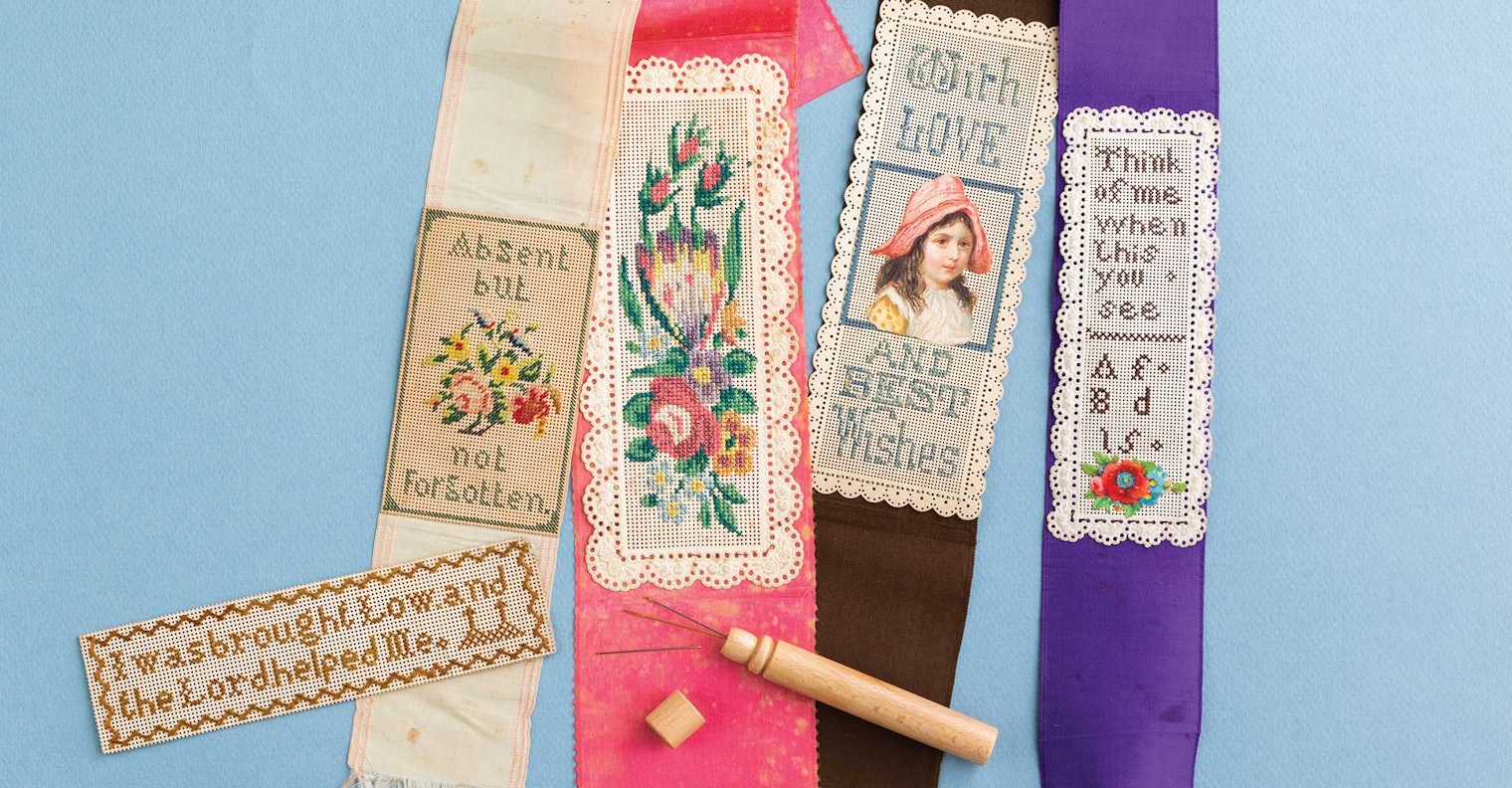
For centuries, stationery and paper goods played an important role in the social life of European society. Stationery stores brimmed with the products needed to meet the high standards of proper etiquette. This abundance ranged from visiting cards, greeting cards, pocket almanacs, lace paper, and embossed envelopes to myriad supplies for making one’s own tokens of affection. Tiny paper flowers, miniature paintings, die-cut scraps, and even dried moss or small shells could be added to intricately embossed, and sometimes silvered, paper backgrounds.
So, it is not entirely surprising that thick paper, or card, was attempted as a ground material for hand embroidery—an important skill for every Victorian lady. Paper proved to be suitable; however, it was used a lot less often than traditional fabrics, such as silk, linen, cotton, batiste, and others.

Cross-stitch and half cross-stitch were common stitching techniques used on perforated paper.
More from PieceWork
From the Library



Comments
No comments yet — be the first to share your thoughts.
Sign in to join the conversation — commenting is for signed-in members.