
Loading the latest stories…
Deciphering the language of Estonian-lace knitting, Nancy Bush explains the subtle, and not so subtle, differences between "rebellious" and true Haapsalu shawls.
Nancy Bush7 min read
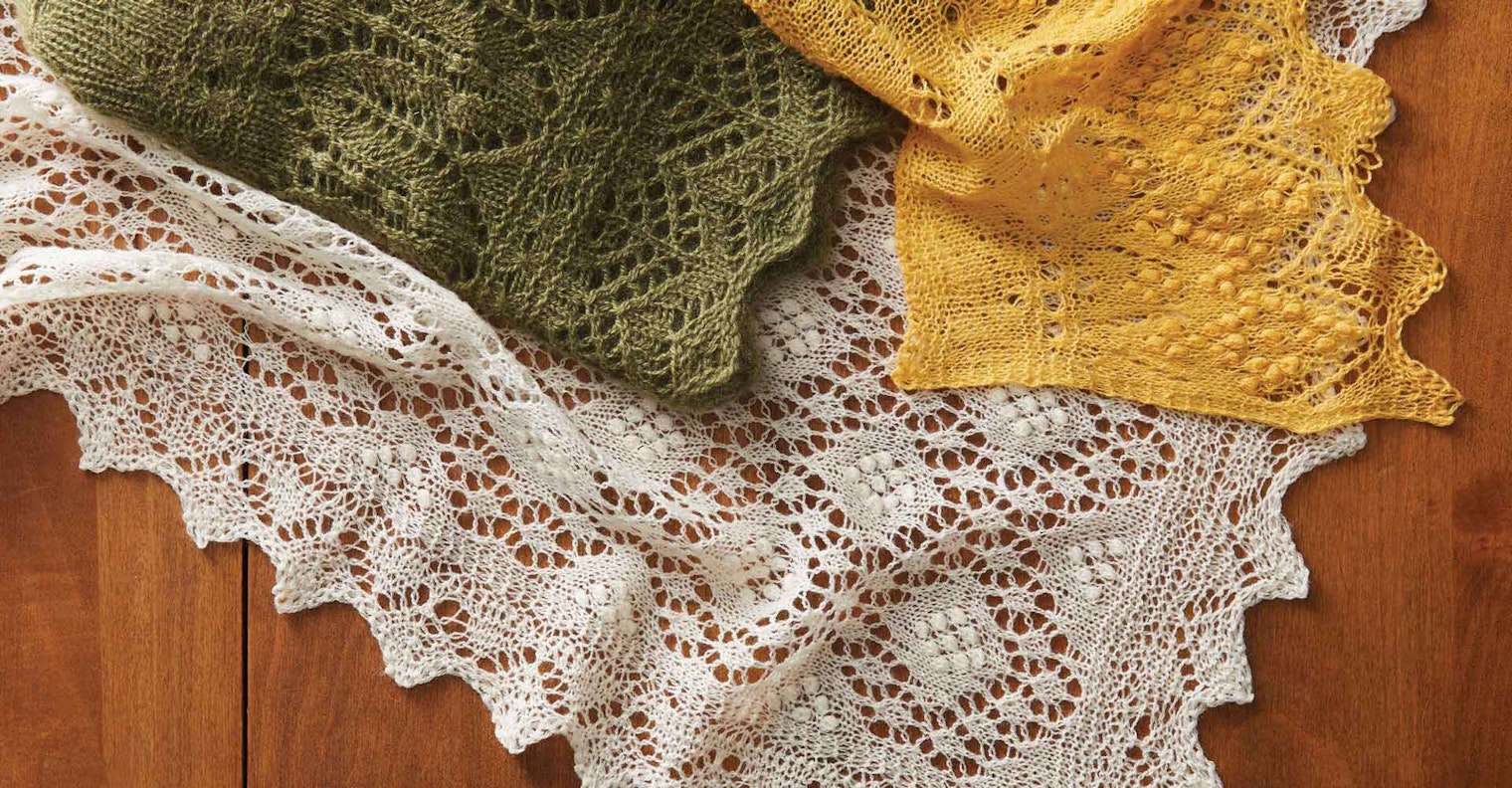
During a trip to Haapsalu, Estonia, in the summer of 2018, I visited a delightful exhibition at the Pitsikeskus (Lace Center). The inspiration for the exhibition, The Definition of a True Haapsalu Shawl, was the way so many visitors to the center would walk in and, noticing a lovely scarf or other item in the shop, comment, “Oh, look, a Haapsalu shawl.” Often, the item was actually neither a true shawl nor a true scarf but a variation in some form of one of the exquisite lace items that have their origins in Haapsalu. (Note: In the “lace language” of Estonia, a scarf is a square or triangle; a shawl is a rectangle.)
The exhibition fascinated me: I studied the items displayed and took many notes. After talking with the knitters there, we decided that these items would be considered “rebellious,” which is important in defining those that are “true.” In the process, I realized that many of the items I have made over the years using techniques from Haapsalu fit, as the exhibition indicated, the description of rebellious lace. Below are some of the characteristics associated with both true Haapsalu shawls or scarves and rebellious ones. Both are important to keeping the 200-year-old heritage of making Haapsalu shawls and scarves alive.
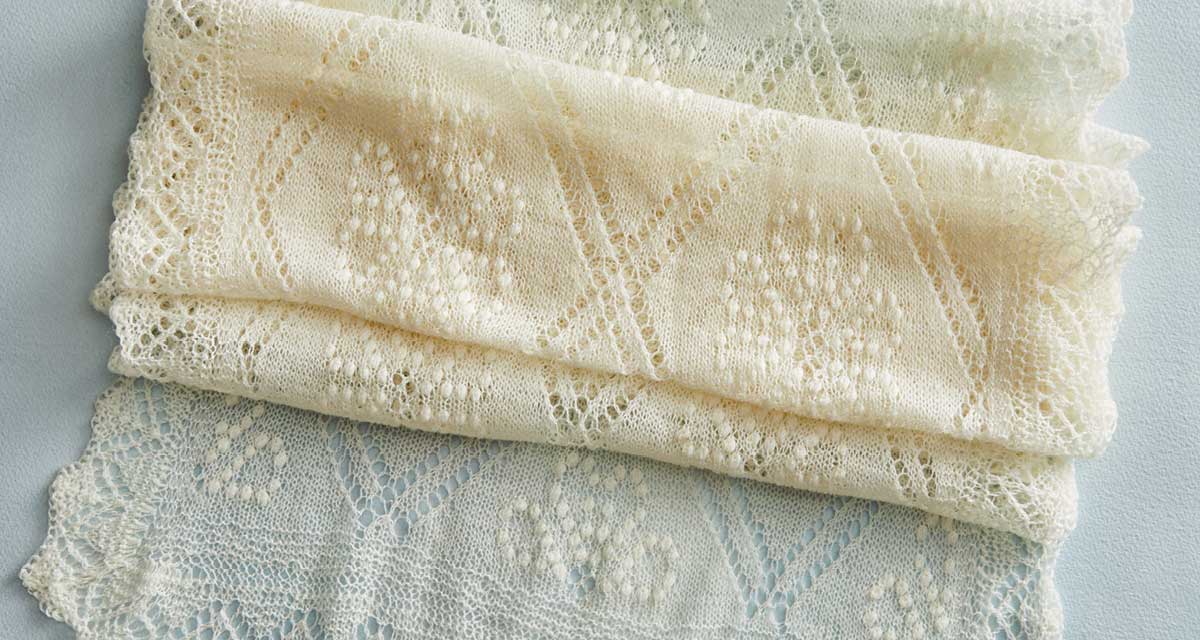
This rectangular shawl knitted by Virvi Palmiste incorporates the Greta Garbo pattern and is an example of a “true” traditional Haapsalu shawl. Collection of Nancy Bush.
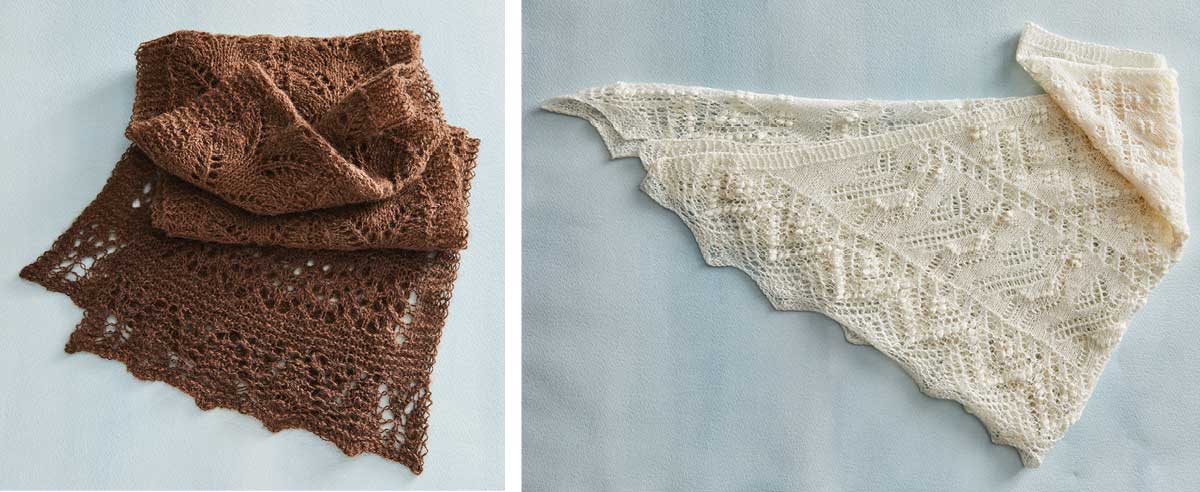
Left: The Prairie Scarf, designed and knitted by Nancy Bush with bison yarn handspun by Judith MacKenzie, is another “rebellious” example. Instructions for making it are in All New Homespun Handknit: 25 Small Projects to Knit with Handspun Yarn (Fort Collins, Colorado: Interweave, 2009). Right: There are three ways to make a triangular scarf. For this scarf, Siiri Reimann used the third method to knit this scarf with the Lääanemaa’s Bird pattern, illustrating that a recently designed pattern that uses traditional elements and techniques is also a “true” traditional Haapsalu shawl. Collection of Nancy Bush.
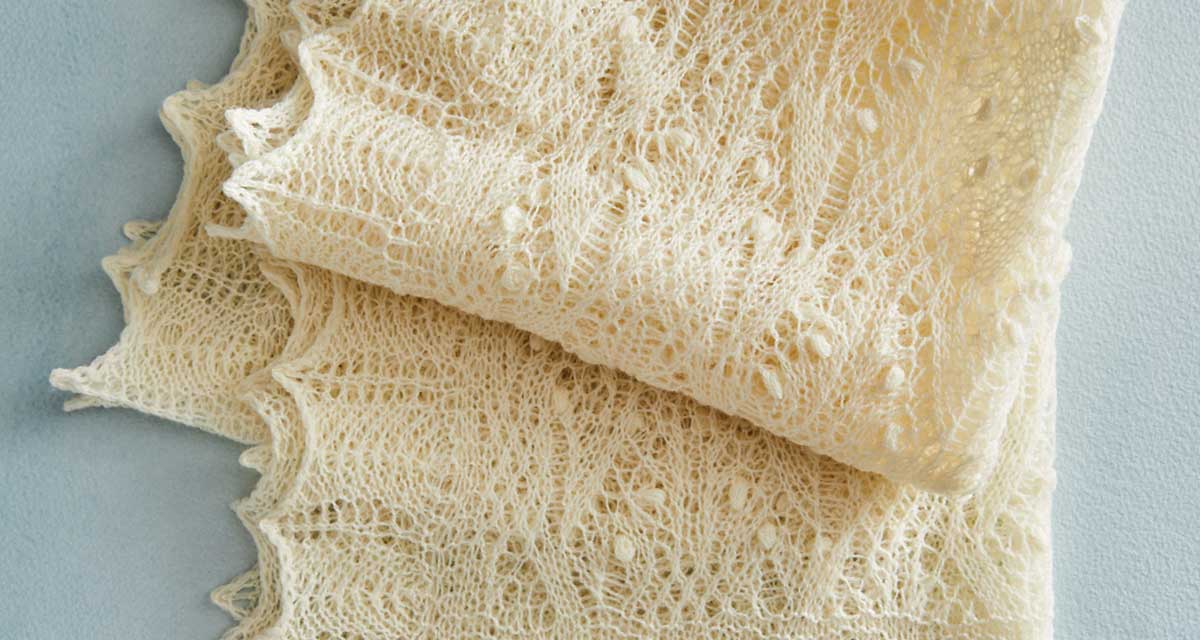
Hilja Aavik’s “rebellious” shawl features a picked-up and knitted-on edge. The center pattern is the Pasqueflower Pattern 2 in The Haapsalu Shawl by Aime Edasi and Siiri Reimann (Türi, Estonia: Saara Publishers, 2009). Collection of Nancy Bush.
The knitters in Haapsalu are very skilled. They love making their traditional shawls and scarves, but they also love trying new things, exploring interesting ideas, and creating new designs. On display in the Pitsikeskus shop, one might see an exquisite, but definitely “rebellious,” dress decorated with traditional Haapsalu lace patterns made with linen yarn. The knitters are pleased to make and sell lovely lace pelerines like the accompanying project or scarves inspired by the Annis Shawl from Susana IC in the shop. Although these items are rebellious, they also fit into the innovation and growth of this 200-year-old cottage industry.
Nancy Bush continues her fascination with Estonia and their lace knitting. She travels to Estonia regularly, always finding something new to catch her attention. The author would like to thank Michelle Poulin-Alfeld for invaluable help with the “architecture” of the pelerine and her great cast-off solution, and Lisa Sewell and Sheryl Gillilan for the loan of their lovely pelerines from Haapsalu.
This article originally was published in the Winter 2019 issue of PieceWork.
More from PieceWork
 Celebrating Jane Austen’s 250th Birthday with a Special Knitting Collection As Jane Austen’s 250th birthday approaches, PieceWork honors Austen’s enduring charm with a special collection of knitting patterns inspired by her beloved world. Karen Elting Brock · December 15, 2025
 Create Beautiful Shawls and Scarves with Our Newest Pattern CollectionOur annual multi-craft eBook is here, bringing together 14 stunning patterns across knitting, crocheting, embroidery, and weaving.Karen Elting Brock · December 1, 2025
 Make an Arts and Crafts Inspired KimonoAdd to your crochet skills—and your wardrobe—with this lacy project.Robyn Chachula · September 11, 2025
 Enjoy Shetland’s Cinderella Story, Told Through Knitted LaceLearn how the knitted lace motifs on a gorgeous shawl tell the folktale of Essy Pattle--Shetland’s Cinderella—and how you can knit it, too!Hazel Carter · September 8, 2025
 A Tribute to a Lace-Knitting Legend: Olga Alexandrovna FedorovaGalina Khmeleva remembers the many months she spent under Olga Fedorova’s careful tutelage and watchful eyes while a guest in Olga’s home in Orenburg, Russia, perfecting her lace-knitting skills. Galina Khmeleva · April 28, 2025
 Inspiration Found in a Knitted Victorian BorderFrom engraving to knitting, Weldon’s Practical Needlework is a wonderful source for inspiration.Carolyn Wyborny · February 17, 2025
 Notions: Just Like Us!Step back in time to the Regency Era with the Spring 2025 issuePat Olski · January 16, 2025
 Martha’s Lace MysteryMy family on my father’s side came to America in the 1600s. Through the centuries, they produced samplers, lace edgings, quilts, and shawls.Anne Berk · November 18, 2024
 Knit an “All Shall Be Well” Shawl Jacqueline based her shawl on the one her grandfather knitted during World War I.Jacqueline Blix · May 8, 2024
 The Basic Elements of Orenburg Lace: Olga Fedorova ChartsOlga Fedorova created her unique color-coded system in the late 1960s when she became quality-control master for the Orenburg knitting cottage industry. Galina Khmeleva · April 29, 2024
From the Library


Comments
No comments yet — be the first to share your thoughts.
Sign in to join the conversation — commenting is for signed-in members.