
Loading the latest stories…
Nancy shares patterns for the technique from the Iowa-based heritage center.
Nancy Nehring4 min read
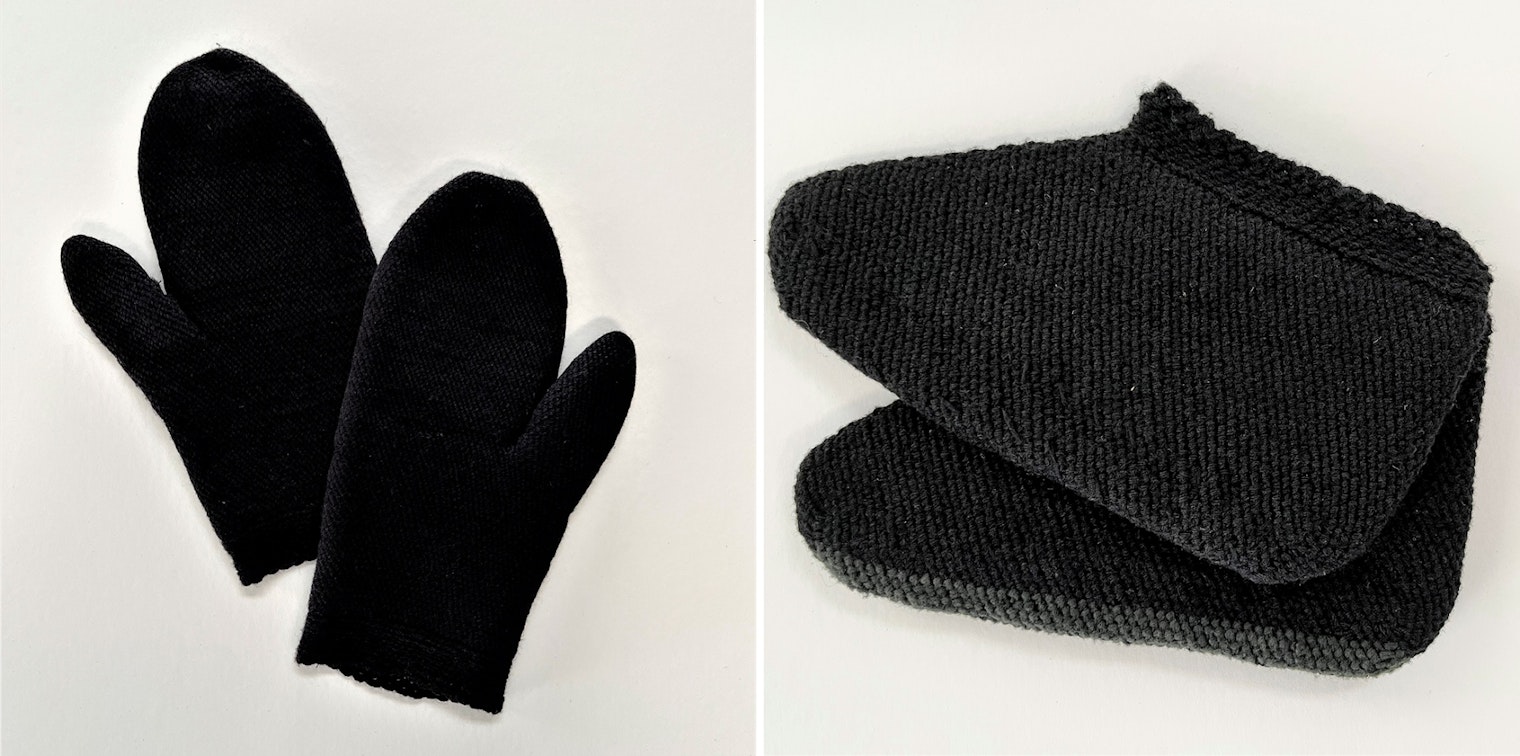
Along with her article for the Winter 2023 issue of PieceWork, Nancy included the guidelines for the construction of mittens and slippers in the slip-stitch crochet tradition of the Amana colonies. We hope you enjoy this bonus content and would love to see your interpretations. Please send us your photos here.
The flat mitten and flat, high-topped slipper are traditional designs from Europe. There was no need to have written patterns. Both are made using easy-to-remember guidelines that can be varied for any size or yarn desired. The bodies are worked flat and even. Shaping is accomplished with simple increases and decreases along the outer edges. The simple chain 3 scallop edging finishing the cuffs indicates these are for a woman.
Part of the beauty of these patterns is that any size yarn can be used. DK weight yarn, and a 4 mm crochet hook (or perhaps one size smaller to get a firmer fabric), is similar to what is used in the Amana colonies.
Only the chain stitches in the round are worked in back loop only (there are only a few chain stitches). All the other stitches in that round and all of the continuing stitches are front loop only. You need to do the chains in back loop only so the front loop only side of the chain can be used to attach the thumb.
 Identical right and left mittens worked in slip-stitch crochet. The simple chain-3 scallop edging that finishes the cuffs indicates these are for a woman. A164Mittens2. Mittens made by Louise Jung Gernand (1862–1938)
 Slippers worked in a traditional pattern with increases and decreases along the outer edges only. One slipper has a dark gray bottom that would not show when
the slipper was worn. 2930Slippers1. Maker unknown
Slippers worked in a traditional pattern with increases and decreases along the outer edges only. One slipper has a dark gray bottom that would not show when
the slipper was worn. 2930Slippers1. Maker unknown
Learn more about slip-stitch crochet in Nancy’s article in the Winter 2023 issue of PieceWork.
Also, remember that if you are an active subscriber to PieceWork magazine, you have unlimited access to previous issues, including Winter 2023. See our help center for the step-by-step process on how to access them.
Although not from the Amana Colonies, Nancy Nehring grew up in Iowa and is descended from Germans who immigrated to rural Iowa about the same time as those who founded the Amana Heritage Society. Numerous visits to the Amana Colonies have given her insights to her own heritage. Although there is a tradition of crochet in Nancy’s family, it does not appear that any of them did slip-stitch crochet.
More from PieceWork
 Discover a Digital Home for Knitting and Crochet HistoryThe Center for Knit and Crochet is building a free, open-access digital museum where collections big and small, famous and personal, finally have a home. Jennifer Lindsay · July 20, 2026
 Hooked on History: The Surprising Collection of Hamilton House Rugs
From the Library


Comments
No comments yet — be the first to share your thoughts.
Sign in to join the conversation — commenting is for signed-in members.