
Loading the latest stories…
Imperfection is a theme within Banjara textiles. To the casual observer, many of the embroidered designs look beautifully symmetrical, but upon closer inspection, there are often small areas of asymmetry or where a pattern briefly changes.
Christina Garton2 min read
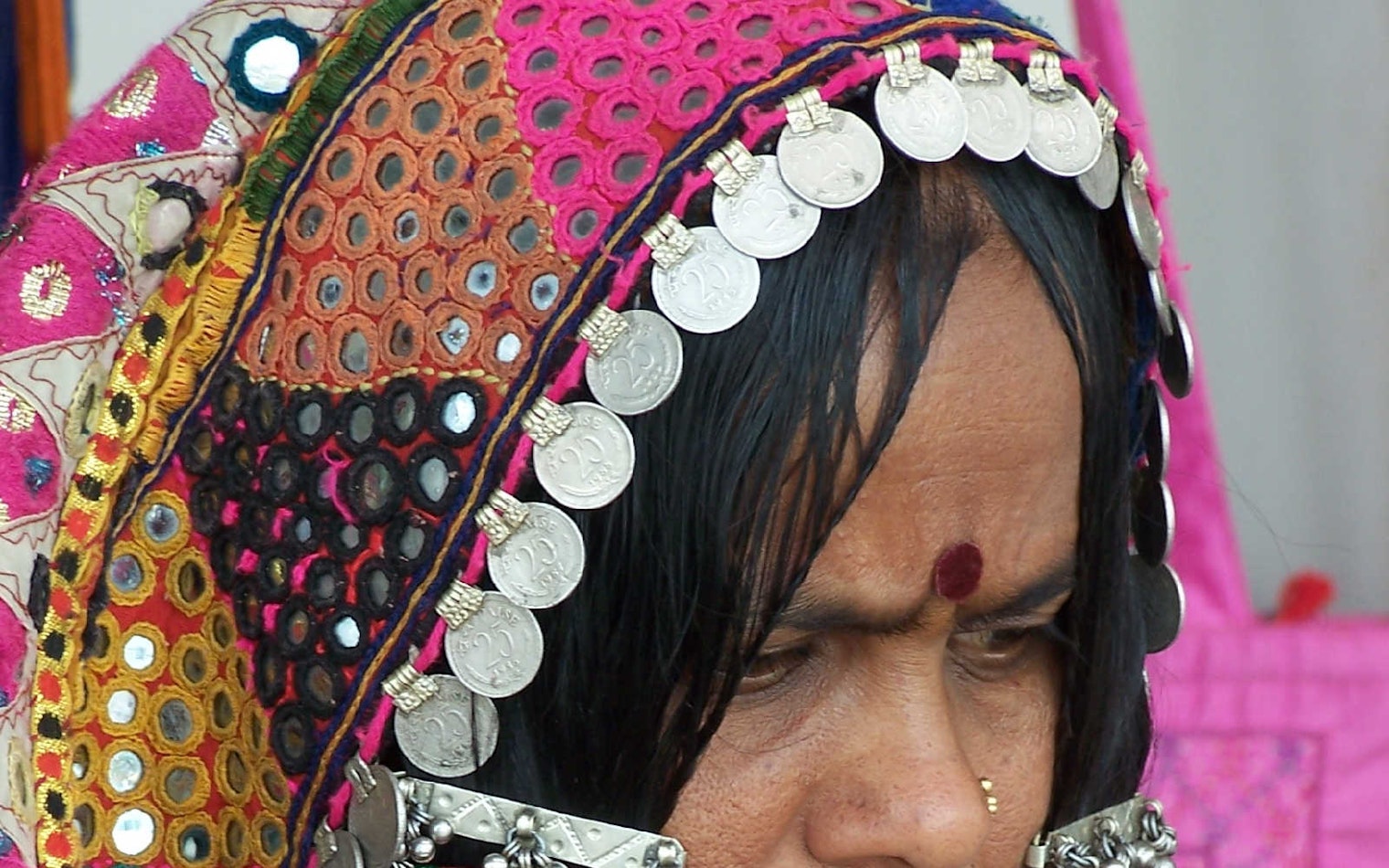
Banjaran embroidery does not boast the figured motifs found in the needlework throughout much of India. There are no flowers or carefully stitched paisley patterns, and, with very few exceptions, there are no animals, either. Instead, the Banjara create elaborate designs using simple shapes and line work. Outlines of circles, rectangles, zigzags, and squares are carefully stitched onto cloth and filled in with even more stitching. In some of the more elaborate textiles produced by the Banjara, nearly every inch of the surface is covered in stitching—it is truly astounding.
Alongside the thread, one can often find small mirrors known as shisha decorating the cloth. In some cases, the face of a cloth is almost entirely covered by shisha carefully embroidered in place. The most valued of these shisha are created using a technique that dates back to Roman times where molten glass is mixed with lead and zinc before being blown into a sphere. This sphere is then broken, and the shards are carefully cut into circles, squares, and other shapes. These handmade shisha are irregular in size and often feature bubbles and an uneven texture. It is these imperfections that make the shisha especially desirable to the Banjara.
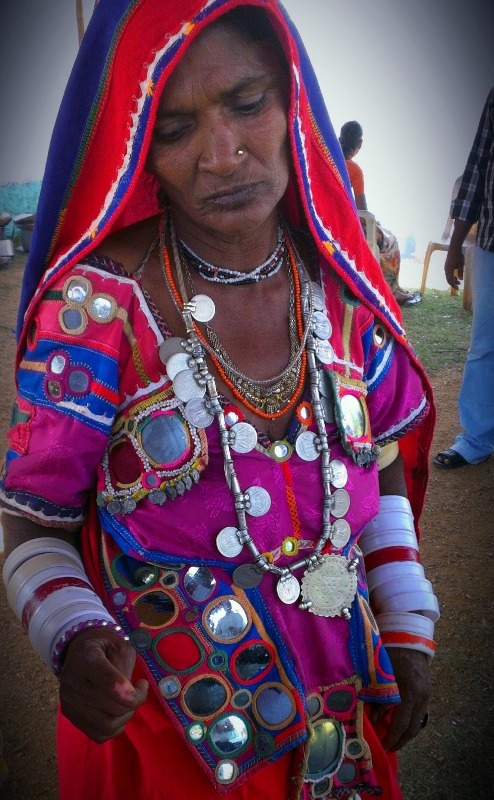
A Banjara woman in traditional dress. Notice the large swaths of fabric covered in shisha. Photo Credit: David B. England.
In fact, imperfection is a theme within Banjara textiles. To the casual observer, many of the embroidered designs look beautifully symmetrical, but upon closer inspection, there are often small areas of asymmetry or where a pattern briefly changes. Perhaps there’s one shape where the outline color doesn’t quite match the rest or a checkerboard pattern where two squares of the same color sit side-by-side. While these might look like careless mistakes or poor planning, in reality these bits are very purposefully placed. The Banjara believe that perfect cloth encourages hubris, and hubris is punished by divine forces. (This is a belief shared by many cultures; just look at the ancient myth of Arachne and Athena.) As a result, small imperfections find their way into these beautiful embroideries, adding to the intrigue.
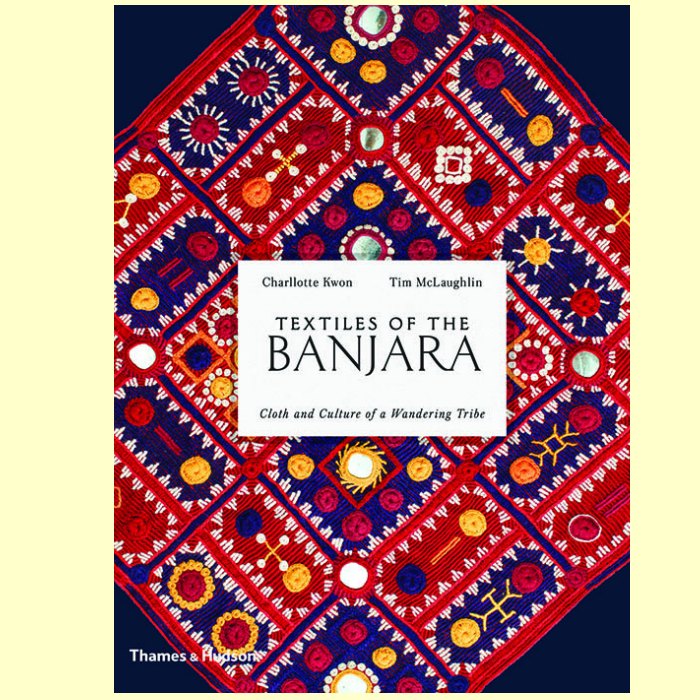
Perhaps this is a lesson all fiber workers can take to heart. Instead of lamenting over errors unseen until it’s "too late," think of them as ways to stay humble and, hopefully, avoid a smiting. If you’re interested in learning more about the Banjara people and their cloth, check out the book Textiles of the Banjara by Charllotte Kwon and Tim McLaughlin.
Happy stitching!
Christina
More from PieceWork
 Upcycled and Recycled: Dhataniya Dowry BagsFor weddings, it is rare for all dowry items to be made brand new. In this case, an upcycled square piece of textile was embroidered and then folded in half and stitched along the sides to form a small bag.Chitra Balasubramaniam · June 15, 2020
 Discover a Digital Home for Knitting and Crochet HistoryThe Center for Knit and Crochet is building a free, open-access digital museum where collections big and small, famous and personal, finally have a home. Jennifer Lindsay · July 20, 2026
 Hooked on History: The Surprising Collection of Hamilton House RugsA visit to a historic mansion in Maine revealed an unexpected collection of hooked rugs that inspired this dazzling rug-hooking project in PieceWork.Karen Elting Brock · July 16, 2026
 Honiton Lace: One of England’s Loveliest LacesExplore the history of this British bobbin lace with a pattern to try yourself, plus a bonus deep dive into a Bucks Point lace edging.Jo Ann Eurell · July 13, 2026
 Long Thread Podcast: Loretta Pettway Bennett, Gee’s Bend QuilterSeason 15, Episode 2: A fifth-generation quilter from the legendary community of Gee’s Bend, Alabama, Loretta Pettway Bennett turns well used cloth into her own expressions of color and community.Anne Merrow · July 11, 2026
 Explore Our Cabinet of Wonders! Discover textile treasures from museums around the world in our Fall 2026 issue of PieceWork.Karen Elting Brock · July 9, 2026
 Flower Power! Vintage Flowers Made SimpleFrom fabric blossoms to daisy loom flowers, learn how to make your own little garden with these vintage techniques. Karen Elting Brock · July 6, 2026
 And He Called It MacaroniIf you’ve ever wondered at the meaning behind the lyrics of “Yankee Doodle,” it might surprise you to learn that the “macaroni” in the song referred not to a noodle, but to a rather odd fashion trend.Christina Garton · July 2, 2026
 Stitching America’s Story: A 500-Foot Quilt for the Nation’s 250th BirthdayAs our nation approaches its 250th birthday, learn about one quilt that aims to stitch together the stories, struggles, and triumphs that built America.Erin Rodewald · June 29, 2026
 The Sparkle of Tradition: How Nineteenth-Century Europe Perfected Knitting with BeadsFrom the Baltics to Britain, learn how nineteenth-century knitters transformed simple wrist warmers and sleeves into dazzling garments with hundreds of tiny glass beads —and get the pattern to knit your own!Carol Huebscher Rhoades · June 25, 2026
From the Library

Comments
No comments yet — be the first to share your thoughts.
Sign in to join the conversation — commenting is for signed-in members.