
Loading the latest stories…
Practical Linen Embroidery, First Series, contains illustrations for numerous elegant stitches to adorn and embellish the Victorian home. Personally, I am a big fan of knots and included within are three ways for working knots.
Elizabeth Prose3 min read
Inside Weldon’s Practical Needlework Volume 6, is a treasure trove of Victorian embroidery stitches. Practical Linen Embroidery, First Series, contains illustrations for numerous elegant stitches to adorn and embellish the Victorian home. Personally, I am a big fan of knots and included within are three ways for working knots.

This illustration from Volume 6 of Weldon’s Practical Needlework shows three ways to work knots. Left to right: French knots, dots, and knot stitch.
Here are the directions as they appeared in 1891 with neither corrections nor alterations:
The knots here illustrated are so useful that no worker should fail to become expert in making them. The group to the left hand shows the best known method of working French knots; those in the middle are sometimes known as dots instead of knots; the group on the right representing knot stitch. This knot stitch may be used either as an outline or as a filling, being easy to work, while a variation can be made by putting the knots near together or far apart, or by arranging them in groups of three or five with a space between each group. It is worked from the right to the left along a line marked on the material. Bring the needle and thread up at the end of the line, and hold the thread down on the line towards the left with the thumb of the left hand. Keep it down, put the needle into the linen just above the thread and bring it out quite straight but exactly below it. Draw up the thread, but do not set it free from below the left thumb until quite the last moment. Then make another stitch exactly on the top of this one, or if the knot is required very much raised, work a third and even fourth. Hold down the thread again along the line and make another knot just where it is required. The dots in the middle of the illustration are made simply by working a back stitch, then another exactly on the top of the first one, a second, and even a third or fourth. These knots may be sprinkled over a design just wherever it requires filling, and it is by no means necessary that they should rest all at the same slope upon the linen. This stitch is often used on delicate materials, such as cambric and pocket-handkerchief linen. The French knots are worked thus: Bring the thread up and hold it down beneath the thumb of the left hand. Twist it twice, three, or four times round the needle between the thumb and the linen, then put the needle back to the wrong side about two threads behind the place where it was brought up. Hold down the thread as long as possible, in order that the knot may be tight and compact.

PieceWork’s editorial assistant Jenna Fear tried her hand at working the three Victorian era knots. Left to right: French knots, dots, and knot stitch. Photo by Elizabeth Prose
Embroidery enthusiast and PieceWork editorial assistant Jenna Fear tried her hand at making the three types of knots. She had made French knots, but the other two were new to her. The dots were simple enough to execute, but the knot stitch proved to be tricky.
We’d love to see your handwork! Send your photos to piecework@longthreadmedia.com.
Happy stitching!
Elizabeth
More from PieceWork
 Long Thread Podcast: Emily Whitted, Texile HistorianSeason 15, Episode 3: Exploring collections of early American cloth, Emily Whitted finds stories of creativity, virtue, and the intimate lives of people from many backgrounds.Anne Merrow · July 28, 2026
 Long Thread Podcast: Loretta Pettway Bennett, Gee’s Bend QuilterSeason 15, Episode 2: A fifth-generation quilter from the legendary community of Gee’s Bend, Alabama, Loretta Pettway Bennett turns well used cloth into her own expressions of color and community.Anne Merrow · July 11, 2026
 From Ticking to Treasure: Reimagining Victorian Embroidered CasesStitch and sew a charming embroidered-ticking bag based on an 1863 pattern.Colleen Formby · May 21, 2026
 Long Thread Podcast: Curtis Gregory, George Washington Carver National MonumentSeason 14, Episode 5: Best known for his work with peanuts, renowned agricultural scientist George Washington Carver had a lifelong passion for needlework. Park Ranger Curtis Gregory shares stories about Carver’s interests in handwork and natural dyeing. Anne Merrow · April 4, 2026
 The Modern Language of TattingWhile the core of the craft has remained the same, the language of patterns has evolved over time.Katrina King · March 30, 2026
 Ceremonies and Celebrations: PieceWork Call for Submissions Spring 2027We're seeking articles and projects that illuminate the role of needlework in ceremonies and celebrations, from wedding finery to ritual textiles.
Karen Elting Brock · March 23, 2026
Ceremonies and Celebrations: PieceWork Call for Submissions Spring 2027We're seeking articles and projects that illuminate the role of needlework in ceremonies and celebrations, from wedding finery to ritual textiles.
Karen Elting Brock · March 23, 2026 Discover an Irish Crochet Masterpiece and One Woman's Journey from Hardship to LegacyLearn the story of a determined dressmaker and her daughters and their precious Irish lace wedding jacket from 1881.Lowanne E. Jones · March 12, 2026
 Mark Twain’s Invention: The Surprising Origin of the Modern Bra StrapDiscover Mark Twain's contributions not only to the literary world, but also to fashion history. Mimi Seyferth · March 2, 2026
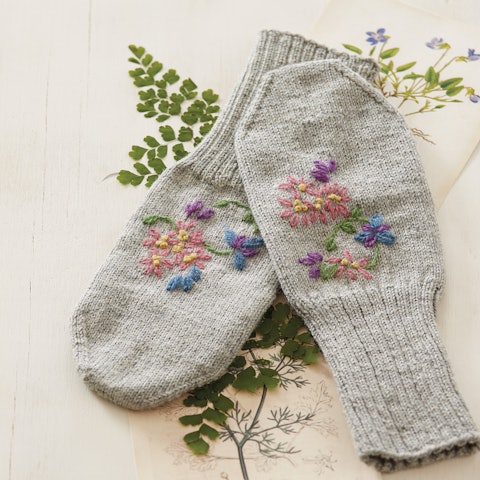 Mittens of Memory: Beauty and Resilience in Wartime AmericaA pair of hand-embroidered mittens from a World War II relocation camp serve as a testament to resilience and the sustaining power of craft. And you can make them, too.Susan Strawn · January 26, 2026
 Long Thread Podcast: Elena Kanagy-Loux, Lacemaker & Historian (classic)Season 13, Episode 9: Ethereal, durable, ornamental, powerful—what does lace mean to you? Through academic study and the work of her hands, Elena Kanagy-Loux teaches that lace is all of these things and more.Anne Merrow · January 10, 2026
From the Library


Comments
No comments yet — be the first to share your thoughts.
Sign in to join the conversation — commenting is for signed-in members.