
Loading the latest stories…
His firm turned the Industrial Revolution on its head, returning focus to and respect for handwork. Explore the origins of his design influence.
Carol Huebscher Rhoades3 min read
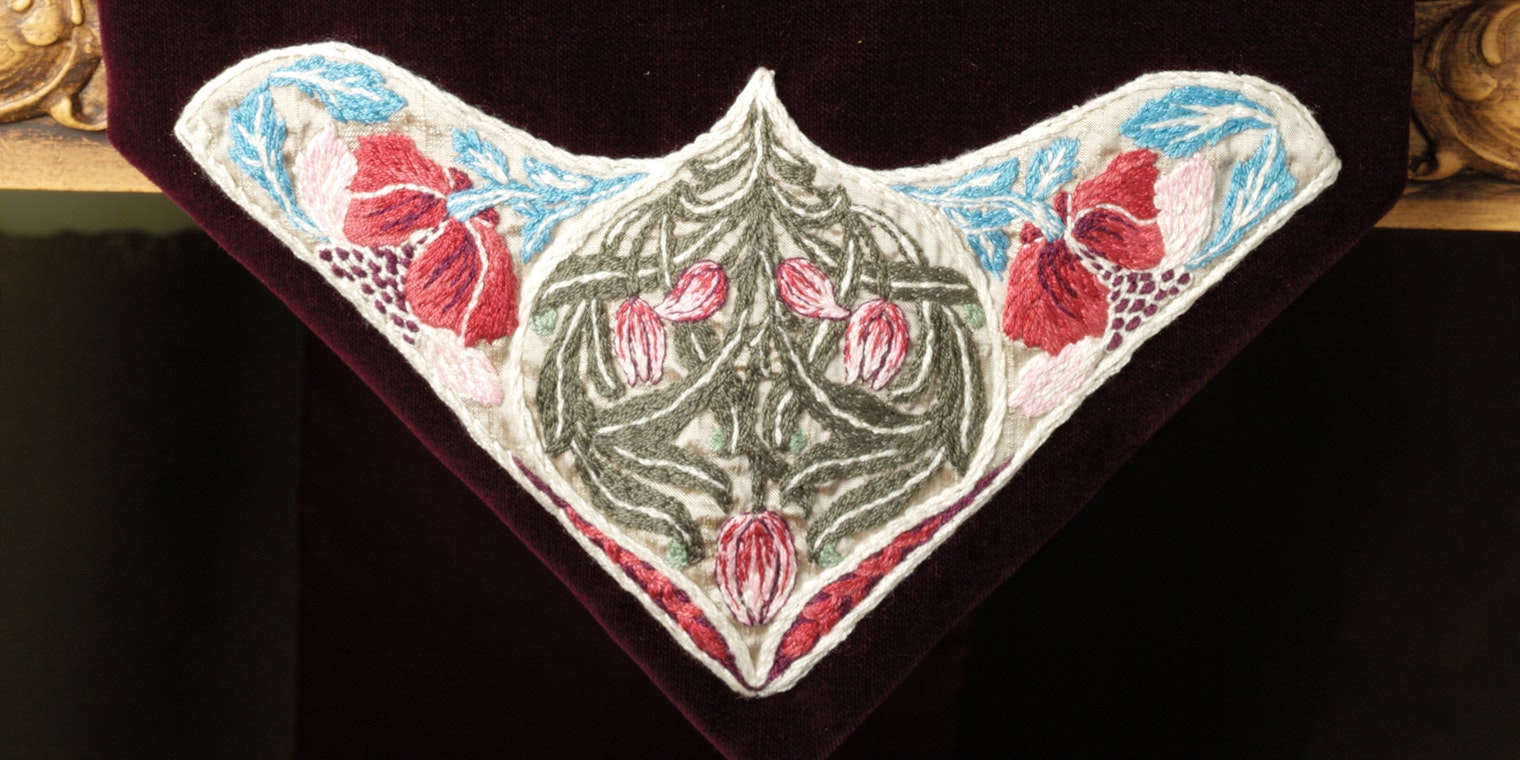
In the Summer 2019 issue of PieceWork, contributor Carol Huebscher Rhoades explores the divide between proponents of the Industrial Revolution and those in the Arts and Crafts movement and explains the lasting effects of both, including the work of Arts and Crafts luminaries William Morris, Dante Gabriel Rossetti, Edward Burne-Jones, and May Morris. Enjoy this excerpt from Carol’s article, “The Arts and Crafts Movement in Britain: Progress from the Past.”
William Morris remains the most enduring representative of the British Arts and Crafts movement. An intelligent man from a well-off family, he embraced the medieval idyll in his childhood, supposedly reading all of Sir Walter Scott’s Waverley novels by the age of seven. At Oxford, he met Rossetti and Burne-Jones, read Ruskin’s writings, studied medieval illustrated manuscripts, and developed as a writer and poet. A walking tour in northern France with Burne-Jones impressed upon both men a lasting sense of beauty in nature and the organic essence of Gothic architecture. Both men imagined the Middle Ages to be “founded on respect, moral leadership and a true sense of a morally ordered society,” according to biographers Rosalind Ormiston and Nicholas Michael Wells. In 1861, the men’s dream of a society where manual labor and handicraftsmen were respected led to the establishment of Morris, Marshall, Faulkner & Co., Fine Art Workmen in Painting, Carving, Furniture, and Metals. Rossetti and Burne-Jones collaborated in The Firm (as it became called), and they honed their design and production skills by completely furnishing and decorating Morris’s Red House east of London. Morris was particularly adept at learning all manner of artisan crafts, including embroidery, printing of textiles and books, weaving, and natural dyeing. He taught his daughters to embroider, partly through unpicking and studying old examples; the younger daughter, May (1862–1938), eventually managed the company’s embroidery department.
 May Morris. George Grantham Bain Collection, Library of Congress Prints and Photographs Division, Washington, D.C. Photo courtesy of the Library of Congress Prints and Photographs Division
While the participants in the Arts and Crafts movement produced all manner of designs, home furnishings, and paintings, Morris’s work is best remembered for his designs from nature that were printed or embroidered onto fabric. Even now, you can buy Morris designs on fabric, wallpaper, and accessories. While the original inspiration for the style came from medieval tapestries and embroideries, Morris’s designs were not meant to be historical or imitative. They were inventive, intricate, and orderly. The overarching rule for Morris was to “have nothing in your houses that you do not know to be useful, or believe to be beautiful.” While early on he acknowledged that the working class he honored and tried to help could not afford his products, he wanted to instill his ideals through all social levels as a way to creating a more equitable social order.
Interested in learning more about historical needlework? This article and others can be found in the Summer 2019 issue of PieceWork.
Also, remember that if you are an active subscriber to PieceWork magazine, you have unlimited access to previous issues, including Summer 2019. See our help center for the step-by-step process on how to access them.
Carol Huebscher Rhoades of Madison, Wisconsin, has a doctorate in comparative literature, specializing in nineteenth-century British and Swedish women’s writing. She teaches workshops on traditional British and Scandinavian knitting and crochet and translates Scandinavian knitting and crochet books and cookbooks into English.
Originally published October 25, 2019; updated March 27, 2023.
More from PieceWork
 Long Thread Podcast: Emily Whitted, Texile HistorianSeason 15, Episode 3: Exploring collections of early American cloth, Emily Whitted finds stories of creativity, virtue, and the intimate lives of people from many backgrounds.Anne Merrow · July 28, 2026
 Long Thread Podcast: Loretta Pettway Bennett, Gee’s Bend QuilterSeason 15, Episode 2: A fifth-generation quilter from the legendary community of Gee’s Bend, Alabama, Loretta Pettway Bennett turns well used cloth into her own expressions of color and community.Anne Merrow · July 11, 2026
 From Ticking to Treasure: Reimagining Victorian Embroidered CasesStitch and sew a charming embroidered-ticking bag based on an 1863 pattern.Colleen Formby · May 21, 2026
 Long Thread Podcast: Curtis Gregory, George Washington Carver National MonumentSeason 14, Episode 5: Best known for his work with peanuts, renowned agricultural scientist George Washington Carver had a lifelong passion for needlework. Park Ranger Curtis Gregory shares stories about Carver’s interests in handwork and natural dyeing. Anne Merrow · April 4, 2026
 The Modern Language of TattingWhile the core of the craft has remained the same, the language of patterns has evolved over time.Katrina King · March 30, 2026
 Ceremonies and Celebrations: PieceWork Call for Submissions Spring 2027We're seeking articles and projects that illuminate the role of needlework in ceremonies and celebrations, from wedding finery to ritual textiles.
Karen Elting Brock · March 23, 2026
Ceremonies and Celebrations: PieceWork Call for Submissions Spring 2027We're seeking articles and projects that illuminate the role of needlework in ceremonies and celebrations, from wedding finery to ritual textiles.
Karen Elting Brock · March 23, 2026 Discover an Irish Crochet Masterpiece and One Woman's Journey from Hardship to LegacyLearn the story of a determined dressmaker and her daughters and their precious Irish lace wedding jacket from 1881.Lowanne E. Jones · March 12, 2026
 Mark Twain’s Invention: The Surprising Origin of the Modern Bra StrapDiscover Mark Twain's contributions not only to the literary world, but also to fashion history. Mimi Seyferth · March 2, 2026
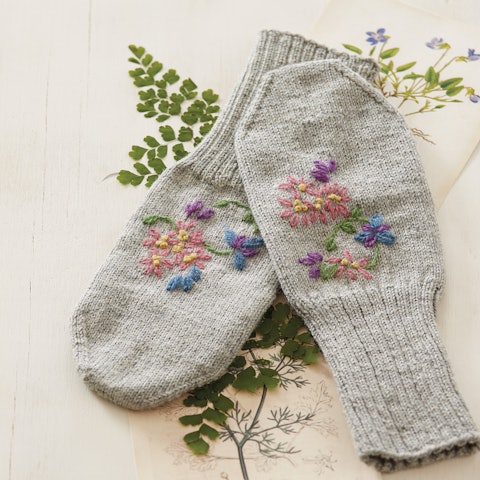 Mittens of Memory: Beauty and Resilience in Wartime AmericaA pair of hand-embroidered mittens from a World War II relocation camp serve as a testament to resilience and the sustaining power of craft. And you can make them, too.Susan Strawn · January 26, 2026
 Long Thread Podcast: Elena Kanagy-Loux, Lacemaker & Historian (classic)Season 13, Episode 9: Ethereal, durable, ornamental, powerful—what does lace mean to you? Through academic study and the work of her hands, Elena Kanagy-Loux teaches that lace is all of these things and more.Anne Merrow · January 10, 2026
From the Library


Comments
No comments yet — be the first to share your thoughts.
Sign in to join the conversation — commenting is for signed-in members.