
Loading the latest stories…
Then Athens and the city-state of Sparta got into a long conflict, the Peloponnesian War, and that’s where our latest story about women’s work comes in.
Deb Gerish5 min read
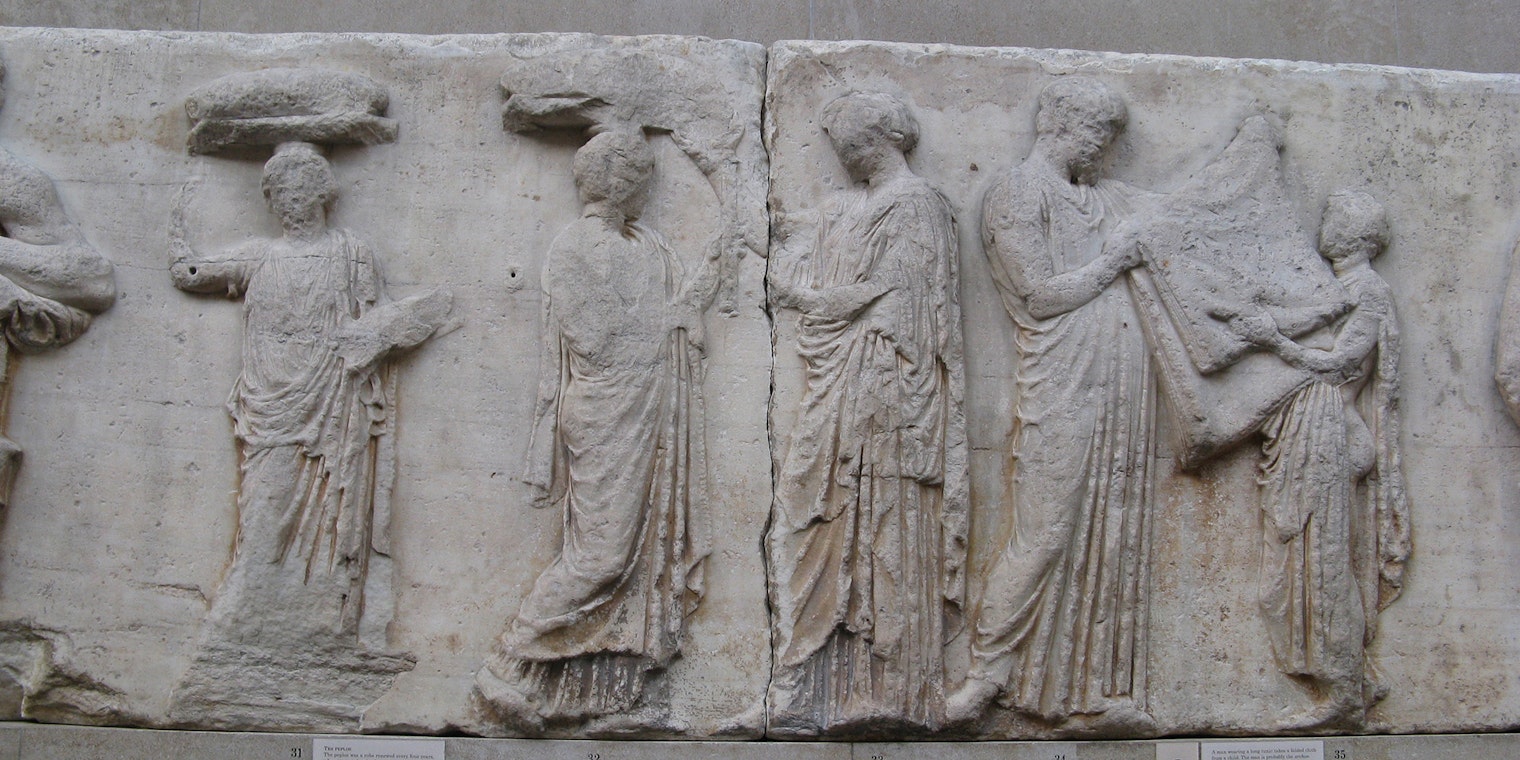
Historical records from the distant past don’t say much about women, and they say even less about women’s everyday lives. Yet every now and then we get fleeting glimpses of the history of textiles. In this series of posts, I’ll share tidbits about textiles and the women who made them, gathered from my years of teaching early world history at the college level. I’ll focus mostly on European and Mediterranean cultures (the ones I know best), and on weaving and spinning until knitting emerged in the 13th century and crochet developed in the 19th century.
In part 1 of this series, we looked at Athena, patron goddess of Athens, and the Panathenaic Festival held in her honor. Athens gets more than its fair share of attention when scholars explore the ancient Greek world from 750 to 300 BCE because it’s the best documented city-state. However, Athens was also the weirdest city-state, by far. It was the only one that had a long-lasting democratic government, and it was a democracy for less than a century.1 Until 510 BCE, it cycled through phases of oligarchy (rule of the few), then tyranny (rule of one man), then oligarchy again. It slowly phased in democracy after the Persian Wars (480–478 BCE). Then Athens and the city-state of Sparta got into a long conflict called the Peloponnesian War (431–404 BCE), which lasted for 24 years, on and off. That's where our latest story about women’s work comes in.
During the most radical period of democratic government, Athenians expected all male citizens to take some role in running the city-state: attending and voting in council meetings, serving on a jury, and/or holding an administrative office for a year. The citizens’ wives, sisters, and daughters could not do any of these things. Instead, women performed religious roles to support their households and the city-state. Contemporaries perceived that women provided essential functions—they just didn’t participate in government.
Broadly speaking, Athens managed its wars in council meetings. The city-state was a direct democracy rather than a representative one. Athens had no president, prime minister, legislative body, or formal political parties. If a general or an ordinary citizen proposed a particular strategy or military campaign in the council, the council would vote yes or no on the same day.
Sometimes this approach worked out well during the Peloponnesian War. At other times, it led to disaster, as in the Sicilian expedition of 415–413 BCE: Athens lost thousands of soldiers and a big part of its navy. When Thucydides wrote the history of this campaign in The Peloponnesian War, he framed it as a dramatic tragedy, where people made bad decision after bad decision until everything fell apart.
 Theater at Ephesus, photo by Norman Herr, courtesy of Wikipedia Commons
Another Athenian writer, the playwright Aristophanes, took a completely different approach to the lengthy war, with subtle reference to the Sicilian expedition: he turned it into a raunchy comedy for Athens’ theatrical festival in 411 BCE. In Lysistrata, an Athenian woman named Lysistrata launches a sex strike so that the men will finally make peace and end the war. She gathers women from all the affected city-states and convinces them to join her peace effort. There’s a lot of physical humor as men try to get their wives into bed; Aristophanes also expected his audience to laugh at the whole idea of women running a city-state and wrapping up a war. (We can be sure that they did find the idea hilarious.)
But the playwright also used metaphors from the women’s world to argue—maybe for the first time in human history—that government should be run like a household. When an Athenian official finally confronts Lysistrata in Scene II to ask how women could possibly run a state, she describes how she untangles a skein of yarn, prepares wool for carding and handspinning, and winds separate balls of yarn into one big ball for weaving. Women could do the same thing to create a peace treaty so that they’d no longer have to watch their children die in battle. (It’s here that the heroine refers to the disaster in Sicily, pointing out the stupidity of the whole campaign.)
Textiles also show up in Scene III, in a much bawdier context. The women barricade themselves in the Parthenon to make their point about ending the war, but they quickly get tired of their sex strike and try to sneak back to their husbands. When Lysistrata confronts them, they make excuses related to their household duties. The first woman mentions her brand-new bolts of wool cloth that will get eaten by wool moths; she has to spread them on the bed so they don’t go to waste. Another has to tenderize the meat for dinner, promising to return after she’s had a chance to "beat her meat." A third insists she's about to give birth, though Lysistrata points out that she didn’t look pregnant the previous day. Lysistrata discovers that the woman has stolen the helmet off the giant Athena Promachos statue and has stuck it under her tunic to create a baby bump.
Aristophanes wrote many plays in his long career, and like most comedies, they’re commentaries on current events. Lysistrata gets staged more than any other of his works because it’s the easiest play to place in a different setting. The central idea of women staging a sex strike to preserve their families—complete with every dirty joke and double entendre you can imagine—has been adapted all over the world. Riffs on this plot show up in theater, ballet, opera, fiction, television, and movies, including an episode of M*A*S*H and Spike Lee’s 2015 movie CHI-RAQ. But I wonder how many viewers today can fully appreciate the references to handspinning and yarn as metaphors for good government.
Deb Garish is a former content manager for PieceWork magazine.
Originally published October 26, 2017; updated March 13, 2023.
1. Each city-state, called a polis (the root of our English word "political" and all its variations), had its own government, and these governments tended to cycle through forms of rule as well as personnel. Starting about 750 BCE, aristocrats governed the important city-states of Sparta, Thebes, and Corinth in small groups, sharing power in an oligarchy. When an oligarchy couldn’t function any longer, a single individual called a tyrannos, or tyrant, would seize power. The first tyrant of a city-state was usually popular—after all, he'd replaced a dysfunctional government, and he placed himself under the law. But his sons or grandsons usually became highly unpopular because they put themselves above the law. By 500 BCE, most city-states booted out their tyrants and went back to oligarchical government. The word "tyrant" got a bad reputation that survives to this day. Athens, too, went through phases of oligarchy and tyranny. Hippias, the last tyrant, became oppressive and the Athenians kicked him out in 510 BCE. (See Thucydides, The Peloponnesian War, Book 6, chapters 54–59, for details—it’s a soap opera of sexual jealousy, public humiliation, and assassination that begins at the Panathenaic Festival of 514.)↩
More from PieceWork
 Long Thread Podcast: Emily Whitted, Texile HistorianSeason 15, Episode 3: Exploring collections of early American cloth, Emily Whitted finds stories of creativity, virtue, and the intimate lives of people from many backgrounds.Anne Merrow · July 28, 2026
 Long Thread Podcast: Loretta Pettway Bennett, Gee’s Bend QuilterSeason 15, Episode 2: A fifth-generation quilter from the legendary community of Gee’s Bend, Alabama, Loretta Pettway Bennett turns well used cloth into her own expressions of color and community.Anne Merrow · July 11, 2026
 From Ticking to Treasure: Reimagining Victorian Embroidered CasesStitch and sew a charming embroidered-ticking bag based on an 1863 pattern.Colleen Formby · May 21, 2026
 Long Thread Podcast: Curtis Gregory, George Washington Carver National MonumentSeason 14, Episode 5: Best known for his work with peanuts, renowned agricultural scientist George Washington Carver had a lifelong passion for needlework. Park Ranger Curtis Gregory shares stories about Carver’s interests in handwork and natural dyeing. Anne Merrow · April 4, 2026
 The Modern Language of TattingWhile the core of the craft has remained the same, the language of patterns has evolved over time.Katrina King · March 30, 2026
 Ceremonies and Celebrations: PieceWork Call for Submissions Spring 2027We're seeking articles and projects that illuminate the role of needlework in ceremonies and celebrations, from wedding finery to ritual textiles.
Karen Elting Brock · March 23, 2026
Ceremonies and Celebrations: PieceWork Call for Submissions Spring 2027We're seeking articles and projects that illuminate the role of needlework in ceremonies and celebrations, from wedding finery to ritual textiles.
Karen Elting Brock · March 23, 2026 Discover an Irish Crochet Masterpiece and One Woman's Journey from Hardship to LegacyLearn the story of a determined dressmaker and her daughters and their precious Irish lace wedding jacket from 1881.Lowanne E. Jones · March 12, 2026
 Mark Twain’s Invention: The Surprising Origin of the Modern Bra StrapDiscover Mark Twain's contributions not only to the literary world, but also to fashion history. Mimi Seyferth · March 2, 2026
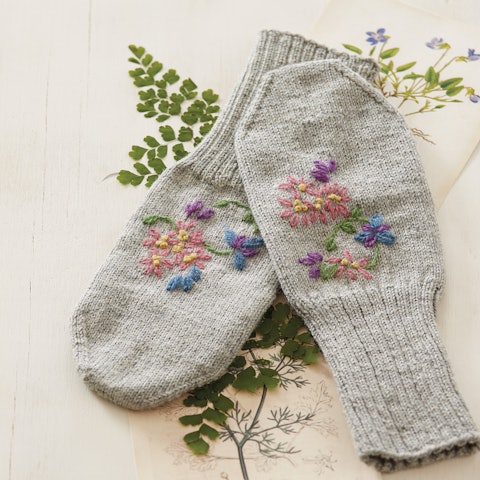 Mittens of Memory: Beauty and Resilience in Wartime AmericaA pair of hand-embroidered mittens from a World War II relocation camp serve as a testament to resilience and the sustaining power of craft. And you can make them, too.Susan Strawn · January 26, 2026
 Long Thread Podcast: Elena Kanagy-Loux, Lacemaker & Historian (classic)Season 13, Episode 9: Ethereal, durable, ornamental, powerful—what does lace mean to you? Through academic study and the work of her hands, Elena Kanagy-Loux teaches that lace is all of these things and more.Anne Merrow · January 10, 2026
From the Library


Comments
No comments yet — be the first to share your thoughts.
Sign in to join the conversation — commenting is for signed-in members.