
Loading the latest stories…
Patching, darning, and mending are enduring ways to cover a weak or broken spot in your fabrics, prolong the life of a cherished garment, and to enjoy embellishing it at the same time. Explore each of them with this All Access exclusive guide.
Piecework Editorial Staff10 min read
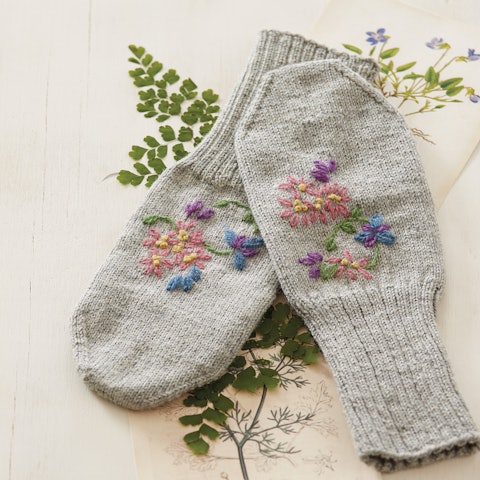
Once, not too long ago, extending the life of garments and linens was not only a necessity but a valuable skill. Young girls learned to darn, patch, and mend either from their mothers or as a part of their education. Today, thrifty stitchers visibly mend and embellish their worn clothing with colorful threads and proudly post pictures on social media. But the methods used for textile repair remain timeless. In this guide, we’ve gathered five noteworthy excerpts from past issues that explore mending, patching, and darning.
You’ll love this guide if you are interested in:
If you have a PieceWork All Access membership, you can view this exclusive guide by logging in to your account below. We hope these stories inspire you to explore the beauty and possibilities of mending in your own textiles or garments.
~ The Editors of PieceWork
P.S. Not an All Access Subscriber yet? Learn more about the program benefits on our subscription information page.
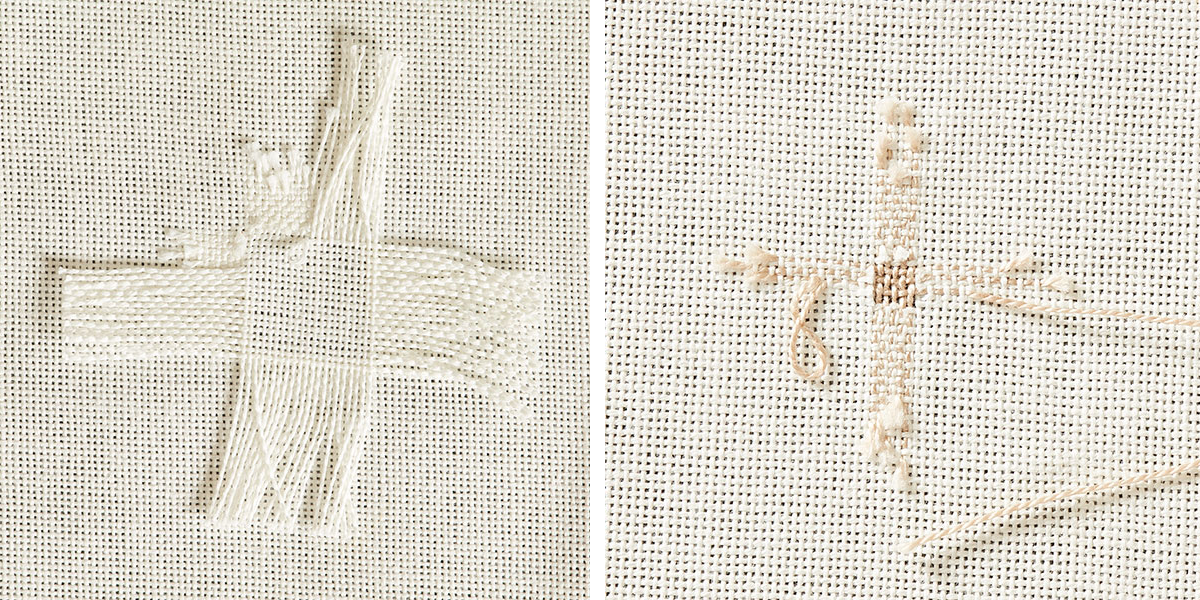
 The invisible technique of linen darning is worked on the wrong side of the fabric by laying in a warp and weaving a plain-weave weft across. Photo by George Boe
Darning is best for small holes and creates a less visible repair than patching. Books on needlework and mending define darning as the repair of a textile by interlacing (or interlooping) threads across a hole or tear. The color of the darn should match the garment as closely as possible, using threads taken from a seam allowance or other accessible place inside the garment, closely matched darning cotton, or embroidery floss.
In The Complete Encyclopedia of Needlework, Thérèse de Dillmont describes four kinds of darning: linen, twill, damask (or fancy), and invisible. A linen darn is worked on the wrong side of the fabric by laying in a warp and weaving a plain-weave weft across. A twill darn is accomplished by floating the weft across the necessary number of warp threads, reweaving to make the characteristic diagonal wale, or rib, of the twill. Damask (fancy) darning is challenging because it requires following the weave structure and pattern of the cloth, possibly with threads of two or more different colors. Invisible darning is a technique by which the edges of a tear are brought together and repaired with a running stitch.
 Four Types of Darning. All drawings show wrong side of fabric. Illustrations by Susan Strawn
More from PieceWork
From the Library





Comments
No comments yet — be the first to share your thoughts.
Sign in to join the conversation — commenting is for signed-in members.