

Victorian Tatting the Weldon’s Way: Eyelet Edging
Here’s our fourteenth installment in this series from Weldon’s Practical Needlework, Volume 4, how to tat an “Eyelet Edging.”
Category
Here’s our fourteenth installment in this series from Weldon’s Practical Needlework, Volume 4, how to tat an “Eyelet Edging.”

Weldon’s Practical Needlework is known mostly for their whimsical yet practical knitting and crochet patterns. But did you know that they house a wealth of information on Victorian tatting, too? Tatters rejoice!
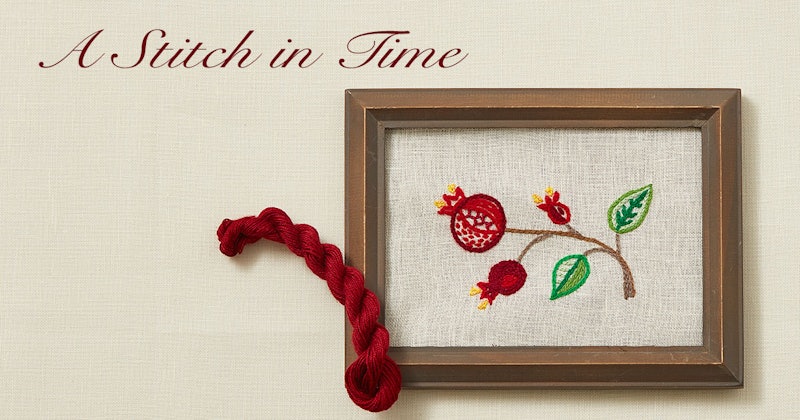
The split stitch is one of the oldest and simplest of the basic embroidery stitches, visually resembling a small compact chain stitch, but with a much narrower and flatter appearance.
Crochet is a language unique in needlework. Learning to crochet is like learning a foreign language that uses a different alphabet, a different construction, and a different elemental foundation.
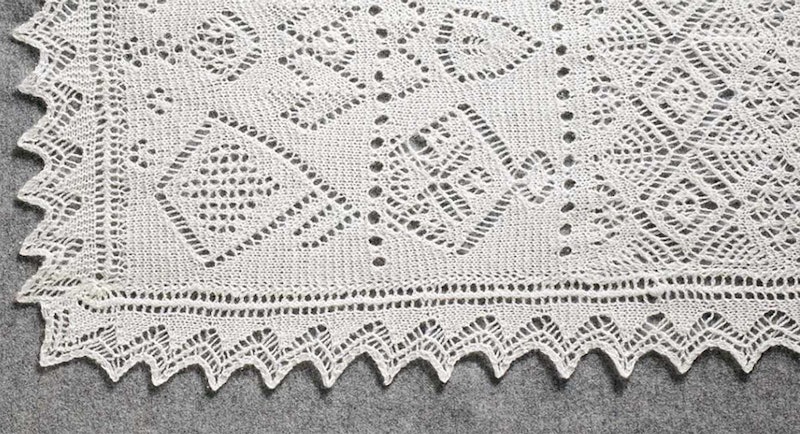
For an example of knitting that would have been done in the last two decades of the nineteenth century, the Victorian era, we asked Carol Huebscher Rhoades to knit the Double Rose-Leaf pattern for us.
We offer up another mysterious Victorian knitting project from the pages of Weldon’s Practical Needlework, Volume 1: Knitted Lace or Edging.
The tête de boeuf stitch is commonly referred to as head of the bull, although a direct translation from the French is “head of beef” stitch, and it also goes by the names of ox head and detached wheat ear.
Named for the lovely Italian city of Siena, the Sienese (Siennese) stitch is an easy, wide-line stitch in the generic looped-stitch family.
Surprisingly, the upright cross-stitch, which resembles the common plus sign, has been either ignored or overlooked in many reference books on needlework stitches.
The feather stitch and its countless variations create feathery straight or undulating lines and fall in the category of looped stitches.
The Cretan stitch derives its name from Crete, the largest Greek island in the Mediterranean Sea, home to one of the oldest civilizations (dating from at least the time of Homer’s Odyssey, around the eleventh century b.c.) and a rich legacy of embroidery.
The Basque stitch, also known as the twisted daisy border stitch, has its origins in the Basque country, located in the western Pyrenees that span the Franco- Spanish border.