
Loading the latest stories…
A new exhibition reveals how Japanese makers extended the life of indigo textiles through the art of piecing and mending.
Karen Elting Brock3 min read
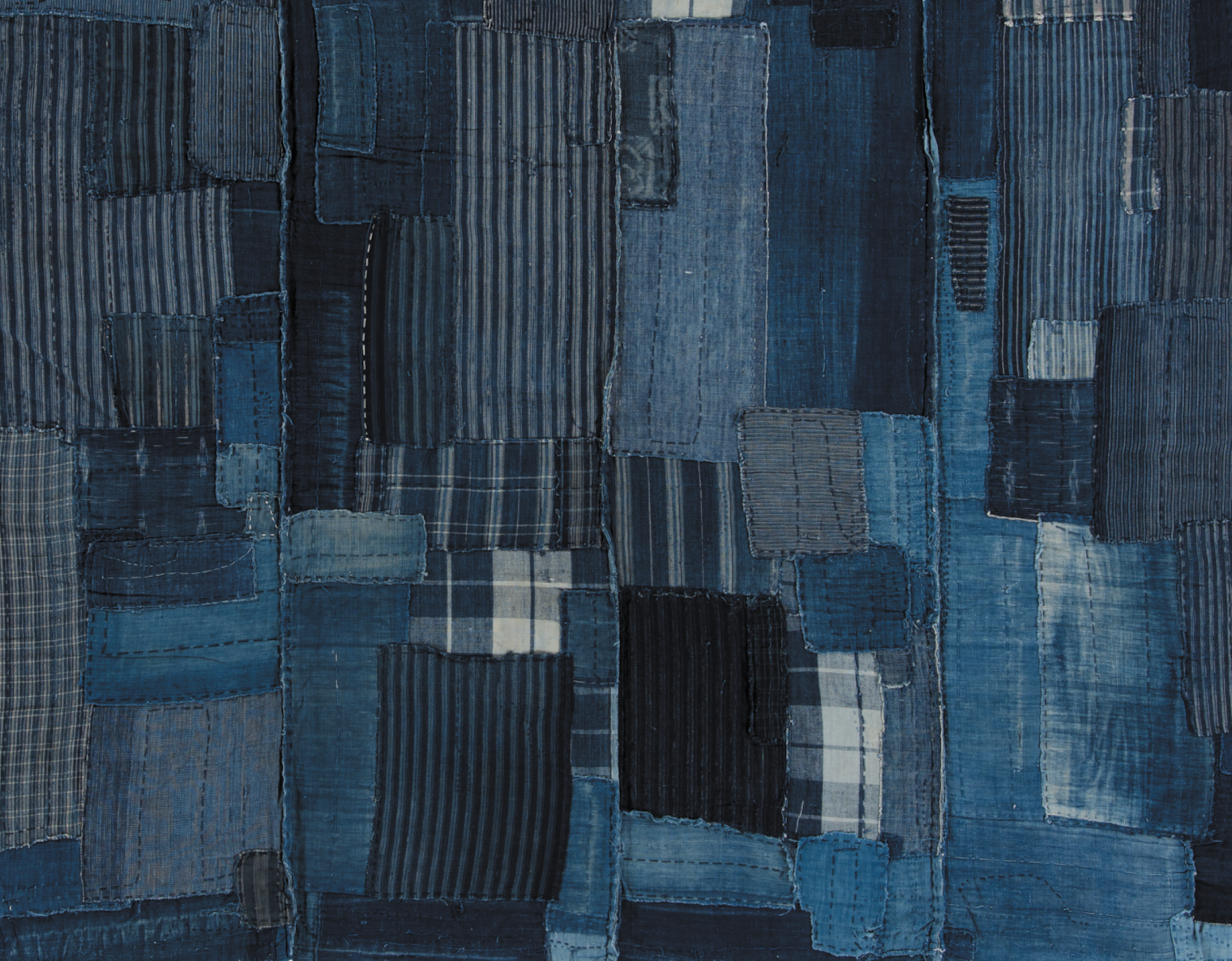
Boro is a Japanese term meaning “rags” and we can trace its roots back to the Edo period in rural Japan when fabric was a valuable commodity. The concept of boro is closely tied to the Japanese philosophy of mottainai, which conveys a sense of regret over waste.
Today boro textiles are celebrated as ingenuity and beauty in reuse.
For this month’s A Place to Come To series, highlighting remarkable textile exhibitions and collections, come along with us as we visit the International Quilt Museum in Lincoln, Nebraska.
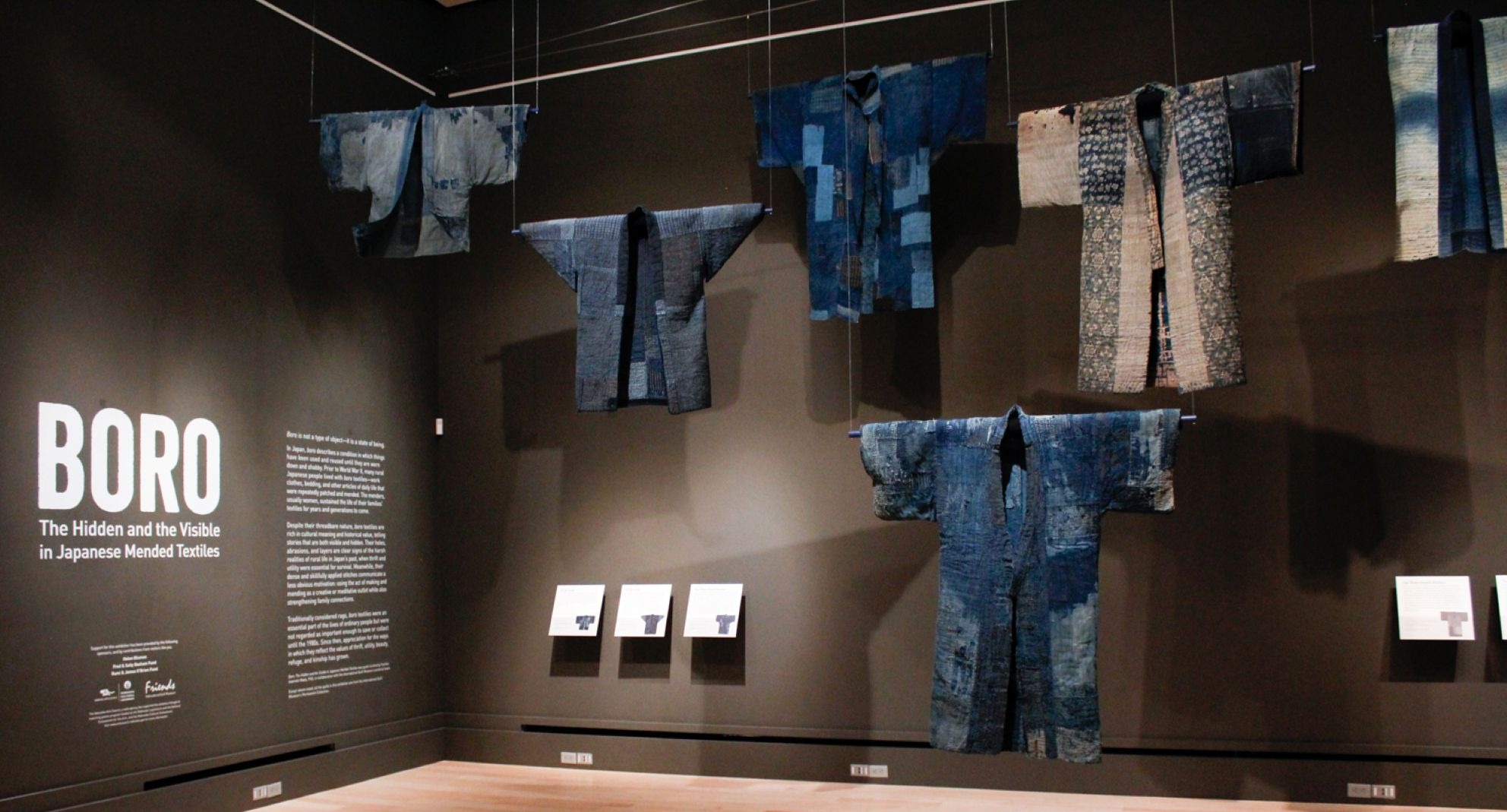
This spring and summer, the International Quilt Museum (IQM) presents a thoughtful new exhibition Boro: The Hidden and the Visible in Japanese Mended Textiles. Boro is a Japanese term meaning “rags” and we can trace its roots back to the Edo period in rural Japan when fabric (especially cotton) was a valuable commodity. As garments became worn and damaged, people mended them using simple running stitches, creating unique layered and patched textiles that were passed down through generations.
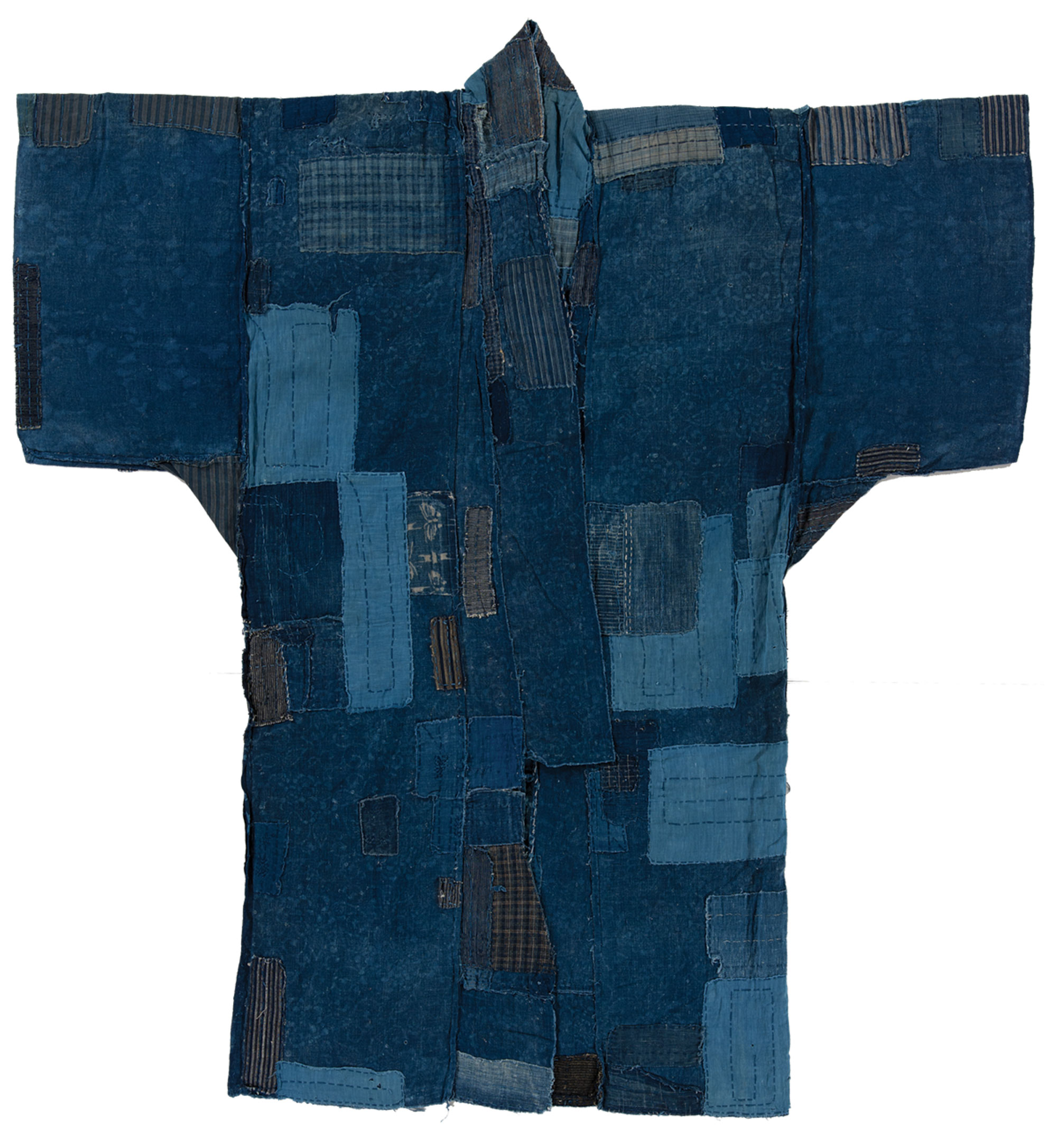
Yogi (Robe-shaped Blanket), Japan, late nineteenth/early twentieth century. Handpieced and hand-mended recycled cottons. Although shaped like a kimono, this yogi functioned as bedding rather than clothing. Gift of the Robert and Ardis James Foundation IQM 2022.018.0003
The concept of boro is closely tied to the Japanese philosophy of mottainai, which conveys a sense of regret over waste. The mending and patching of textiles were not just practical solutions to extend clothing life, they also reflected a cultural appreciation for the value of resources. Today boro textiles are celebrated as ingenuity and beauty in reuse.
The Hidden and the Visible is curated by Dr. Yoshiko I. Wada, a renowned artist and scholar of Japanese textiles. Dr. Wada has carefully selected a group of historic boro textiles, mostly from the late nineteenth and early twentieth centuries, that include both garments and household cloths. These pieces illustrate multiple generations of repair, revealing how families extended the life of their fabric through repeated mending.
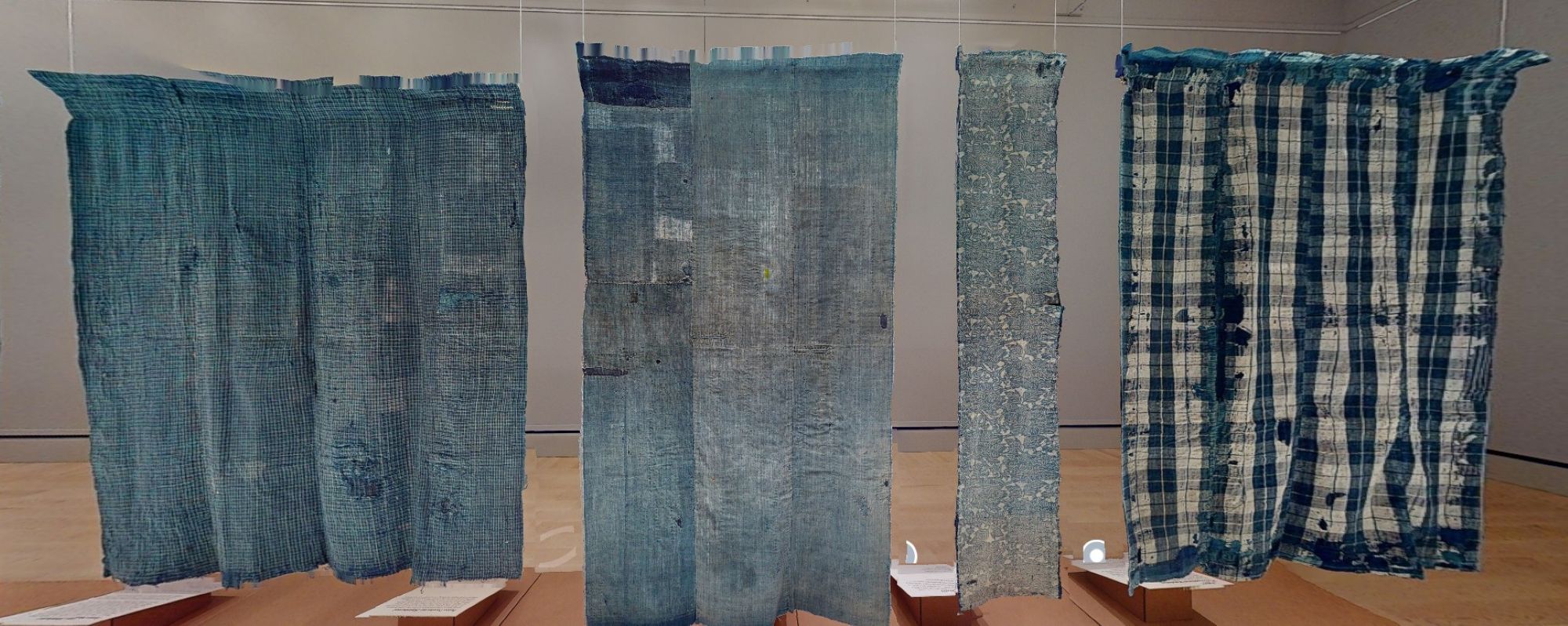
The back side of several indigo-dyed and patched boro pieces in the exhibition. Pieces were hung so that visitors can clearly view both sides.
Interpretive materials throughout the boro gallery illuminate the cultural, economic, and environmental contexts that shaped boro traditions, offering visitors a deeper understanding of this enduring practice. Several live and recorded conversations about the exhibit and history of boro with Dr. Wada and IQM staff are running concurrently with the exhibition. If you’re not able to visit in person, the museum’s website offers a fantastic virtual tour that makes you feel like you’re steps away from the actual cloth.
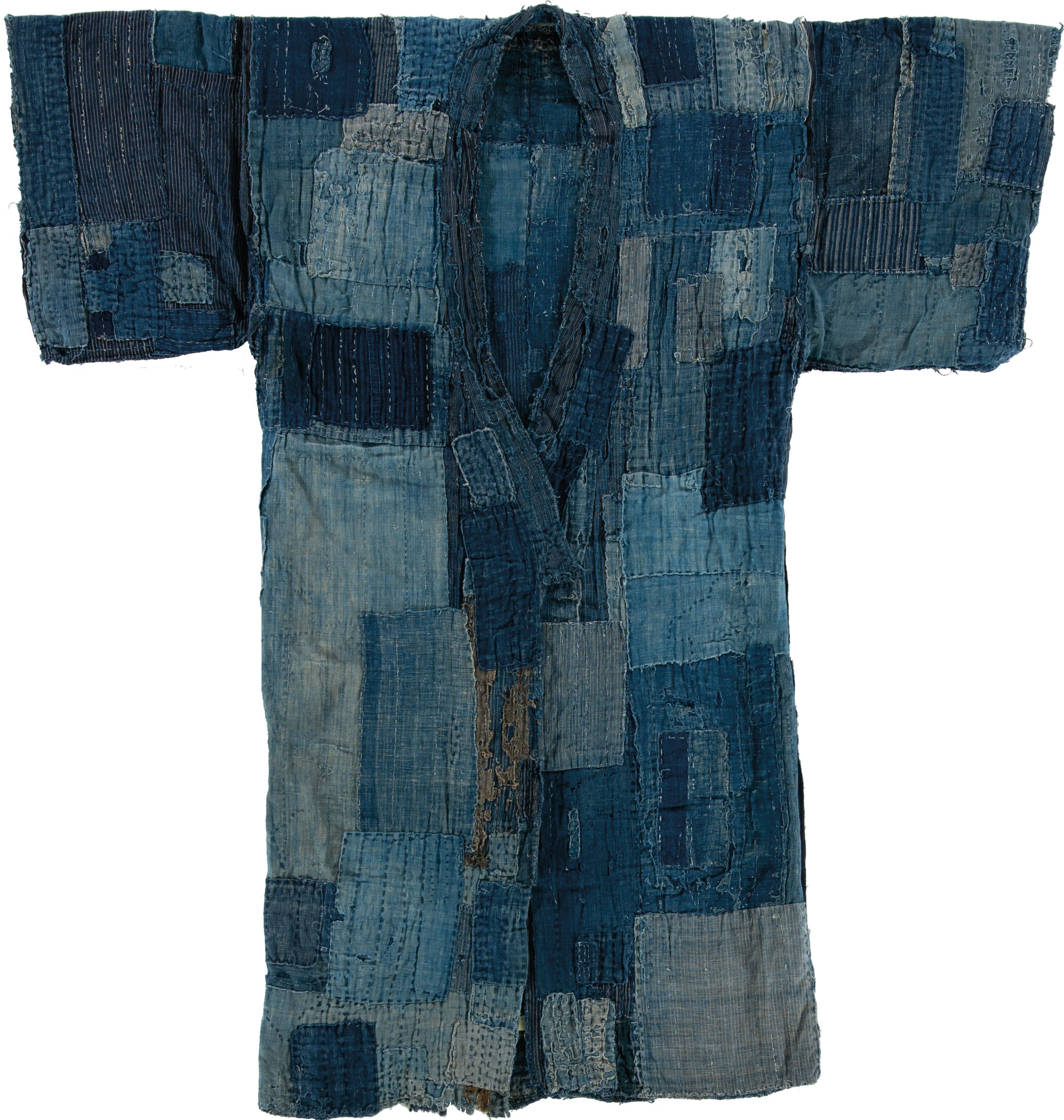
Noragi Robe, Japan, late nineteenth/early twentieth century. Handpieced and hand-mended recycled cottons. Gift of the Robert and Ardis James Foundation IQM 2021.007.0001
Boro is a testament to the resilience and adaptability of traditional needlework. What started as a practical response to scarcity has blossomed into a revered art form that captures the spirit of mending: resourcefulness and sustainability. This exhibition offers a rare chance to see how necessity and creativity work together in one of Japan’s most poetic traditions.
The International Quilt Museum showcases the world’s largest public collection of quilts, highlighting their cultural and artistic significance. Founded in 1997, the museum presents rotating exhibitions and educational programs drawn from its global textile collection, much like its current boro exhibition. You'll find everything at the IQM from a quilted petticoat from the UK, circa 1740–1760 (love!) and a range of eighteenth-century whole cloth quilts to Uzbek cradle covers and traditional double wedding ring quilts from the 1900s. A trip to the middle of the country to check out this gem of a collection is well worth the journey.
The Hidden and the Visible is on view until June 20, 2026.
If you want to learn more about boro and sashiko, you’ll enjoy PieceWork’s Fall 2024 and Summer 2021 issues, and also check out these stories on our website: “Visible and Invisible Mending: Darning, Kantha, Boro,” and “Kogin and Hishi.”
Happy viewing!
Karen
More from PieceWork
 Discover a Digital Home for Knitting and Crochet HistoryThe Center for Knit and Crochet is building a free, open-access digital museum where collections big and small, famous and personal, finally have a home. Jennifer Lindsay · July 20, 2026
 American Girlhood: Needlework, Memory, and the Making of a NationA new exhibition at the Webb Deane Stevens Museum gathers early American needlework to show how girls used needle and thread to record their worlds, often in ways history has only just begun to recognize.Karen Elting Brock · May 4, 2026
 Where Craft, Culture, and Community MeetFounded on the idea that art lives in daily life, the Mingei Museum honors the creativity of ordinary makers.Karen Elting Brock · March 9, 2026
 The Surviving Threads of Orvieto's Handmade Lace and the Art They PreserveDiscover the crochet lace of Orvieto, Italy, a fragile inheritance of skill, memory, and place, preserved against the pull of time. Terry Konrath · January 29, 2026
 Celebrating the Art of Chinese Patchwork: One Hundred Stitches, One Hundred Villages Discover a hidden tradition at the newest exhibition at the Museum of Fine Arts, Boston. It’s the latest destination in our A Place to Come To series, highlighting remarkable exhibitions and collections.Karen Elting Brock · December 29, 2025
 Craft and Self-Discovery: Inside “The Art of Being” Exhibition For the second installment in our “A Place to Come To” series, we turn to Multicolores. This nonprofit association of Maya women in Guatemala offers programs that encourage artistic development, self-discovery, and economic empowerment.Karen Elting Brock · November 27, 2025
 A Place to Come To: Discover the Art Institute of Chicago We’re launching a new monthly series spotlighting inspiring exhibitions and collections. First up is "On Loss and Absence: Textiles of Mourning and Survival." Come along as we visit the galleries.Karen Elting Brock · October 30, 2025
 Hooked on History: The Surprising Collection of Hamilton House RugsA visit to a historic mansion in Maine revealed an unexpected collection of hooked rugs that inspired this dazzling rug-hooking project in PieceWork.Karen Elting Brock · July 16, 2026
 Honiton Lace: One of England’s Loveliest LacesExplore the history of this British bobbin lace with a pattern to try yourself, plus a bonus deep dive into a Bucks Point lace edging.Jo Ann Eurell · July 13, 2026
 Long Thread Podcast: Loretta Pettway Bennett, Gee’s Bend QuilterSeason 15, Episode 2: A fifth-generation quilter from the legendary community of Gee’s Bend, Alabama, Loretta Pettway Bennett turns well used cloth into her own expressions of color and community.Anne Merrow · July 11, 2026
From the Library

Comments
No comments yet — be the first to share your thoughts.
Sign in to join the conversation — commenting is for signed-in members.