
Loading the latest stories…
Help us rediscover the textile stories lost to time. Send PieceWork your article and project proposals for the Spring 2022 issue.
Piecework Editorial Staff3 min read

Craft books and ladies’ magazines became common in some parts of the globe in the nineteenth century, but there have always been other ways to share and acquire knowledge. Needleworkers pass along techniques and patterns, motifs and meanings, from person to person in both formal and private settings. Some stitching traditions were not passed from hand to hand, but carried forward through textile fragments, knitted samplers, or journals stuffed with small sections of crocheted edgings.
Some needlework traditions were shared and then later adapted or altered by the following generations, while other textiles and techniques were carefully guarded. Thus, there are many examples of methods that may have been lost, forgotten, or just fallen out of favor. With this in mind, we dedicate the Spring 2022 issue to uncovering the techniques, tools, and textiles that have been lost and then found by modern makers.
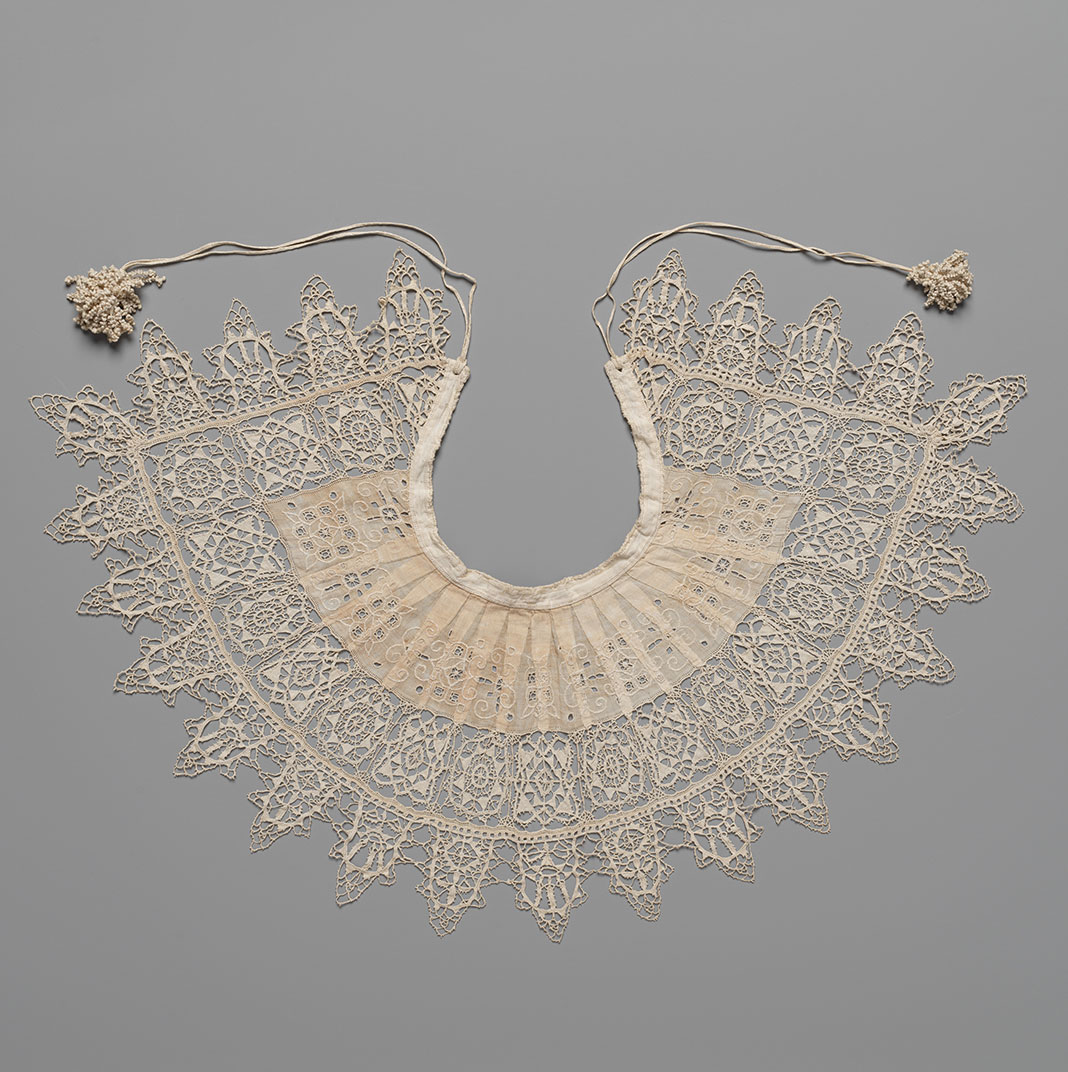
Punto in aria, literally "stitches in the air," is one of the earliest styles of needle lace, which is itself developed from cutwork of primarily geometric design. When lacemakers transitioned to using a foundation of threads laid out according to a pattern drawn on parchment, they were able to incorporate more fluid lines and curves into their designs. Standing band (collar) with tassels, ca. 1610–20. Possibly French. Cutwork, needle lace, reticello, punto in aria, embroidery, linen. 9-1/2 x 8 inches (49.5 x 20.3 cm). Gift of Mrs. Edward S. Harkness, 1930. Accession Number: 30.135.147. Photo courtesy of the Metropolitan Museum of Art, New York
The creation of cloth goes back centuries, but intact textiles found at archeological sites are rare. New finds—such as the recent discovery that the alter cloth in a village church was originally a dress worn by Queen Elizabeth I—add new information as researchers continue to piece together the story of how fabrics were constructed, used, and reused.
Do you have a story to share about a nearly lost method for making lace? What recent discoveries can you share about the evolution of knitting or crochet? Did a fantastic find at the bottom of your grandmother’s mending basket spark an interest in reuse and repair that skipped a generation? For the Spring 2022 issue of PieceWork, help us rediscover some of the textile stories lost to time and send us your article and project ideas.
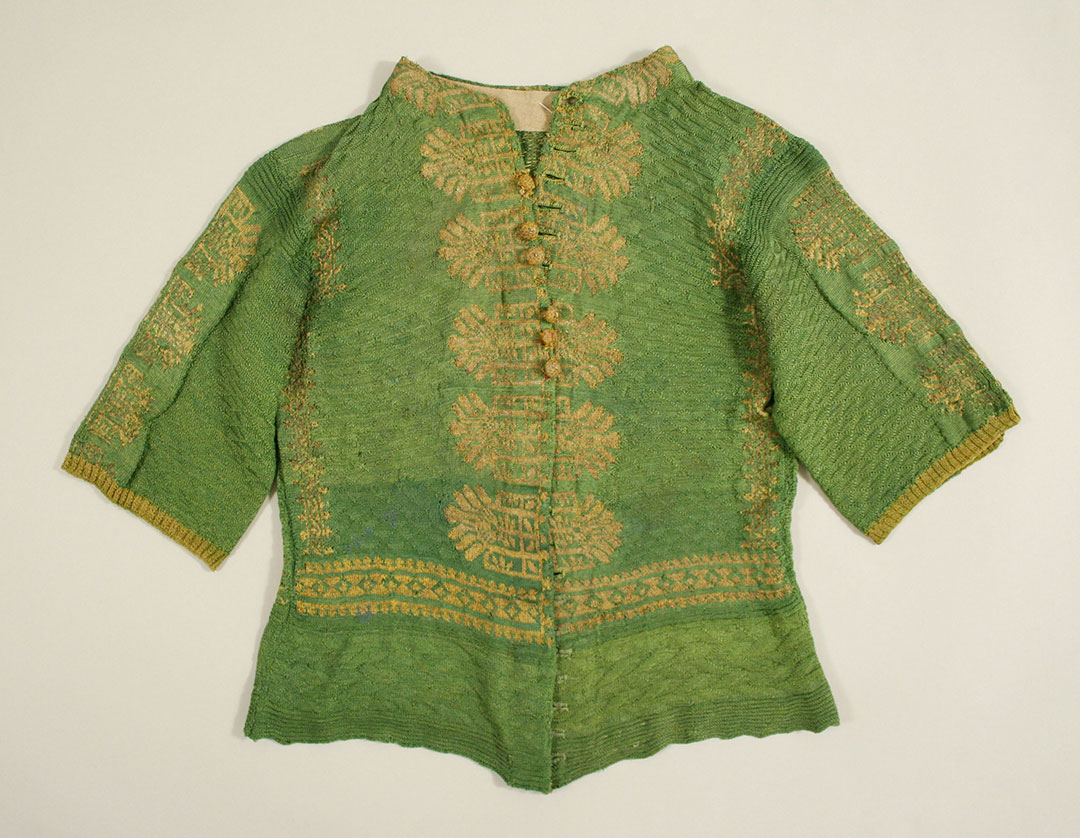
The rare knitted silks of the seventeenth have never been fully explained, but were probably informal wear. Sweater, late seventeenth century. European. Silk. Frederick C. Hewitt Fund, 1914. Accession Number: 14.134.18. Photo courtesy of the Metropolitan Museum of Art, New York
We are looking for:
Have an idea that doesn’t fit our theme? Send that to us, too! We may be able to use it in an upcoming issue.
We are also always looking for content for our website. If you have an idea for a shorter piece, about 300 to 500 words, please submit your proposal using the online submissions form below.
Online Submissions Form PieceWork Spring 2022
PieceWork Contributor's Guidelines
PieceWork Photo Guidelines
Questions? Contact us at piecework@longthreadmedia.com.
Do you want to be added to the PieceWork Call for Submissions email list? Sign up here.
More from PieceWork
From the Library


Comments
No comments yet — be the first to share your thoughts.
Sign in to join the conversation — commenting is for signed-in members.