
 SUB
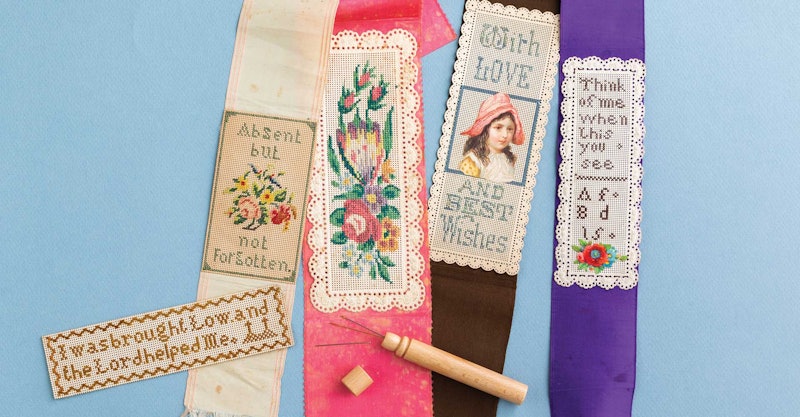
SUBForget-Me-Nots from the Victorian Age: Perforated-Paper Embroidery
In the Victorian era, it is not entirely surprising that thick paper, or card, was attempted as a ground material for hand embroidery—an important skill for every Victorian lady.
Category
SUBIn the Victorian era, it is not entirely surprising that thick paper, or card, was attempted as a ground material for hand embroidery—an important skill for every Victorian lady.
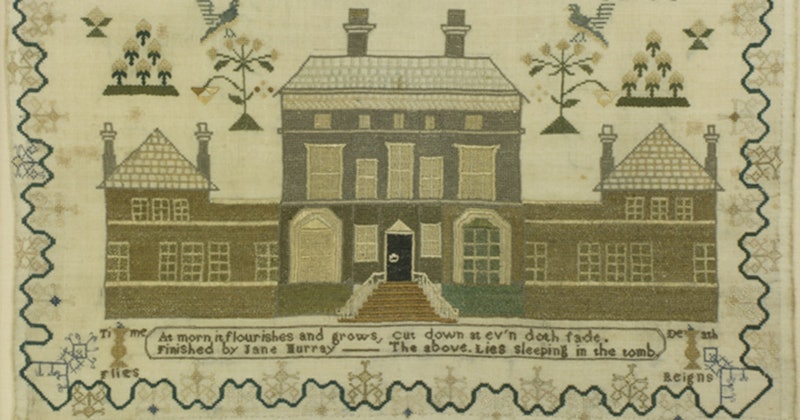
The Scottish samplers in an exhibition at the Museum of Scotland in Edinburgh are part of the Lesley B. Durst collection.
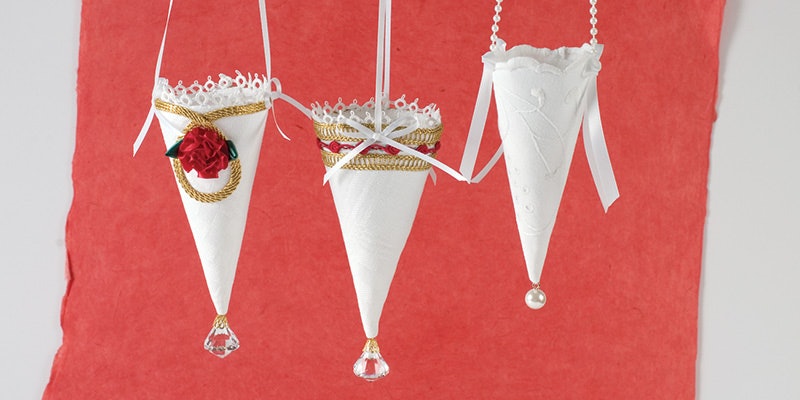
Why not add a dash of vintage flair to your holiday wrapping? Mary Polityka Bush shared festive ways to wrap gifts in the Nov/Dec 2007 issue of Piecework.
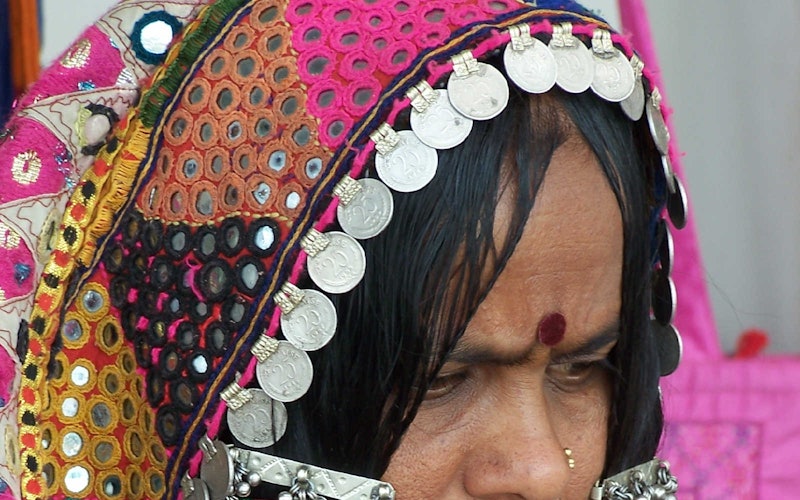
Imperfection is a theme within Banjara textiles. To the casual observer, many of the embroidered designs look beautifully symmetrical, but upon closer inspection, there are often small areas of asymmetry or where a pattern briefly changes.
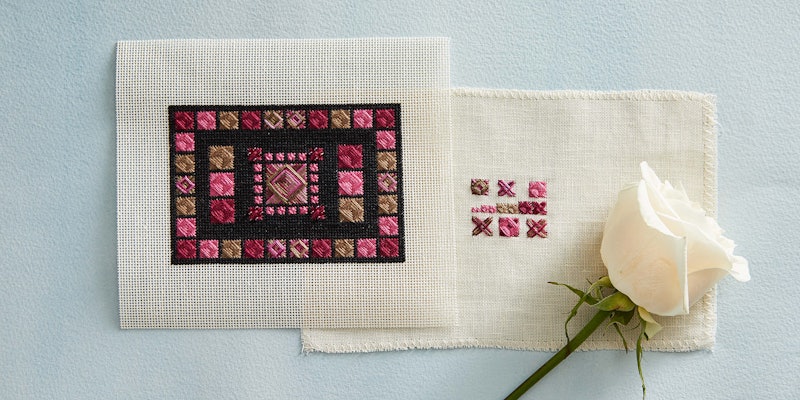
The Norwich, waffle, southern cross, or plaited interlaced stitch is considered to be a large, square, highly textured, modern-day canvas and needlepoint stitch.
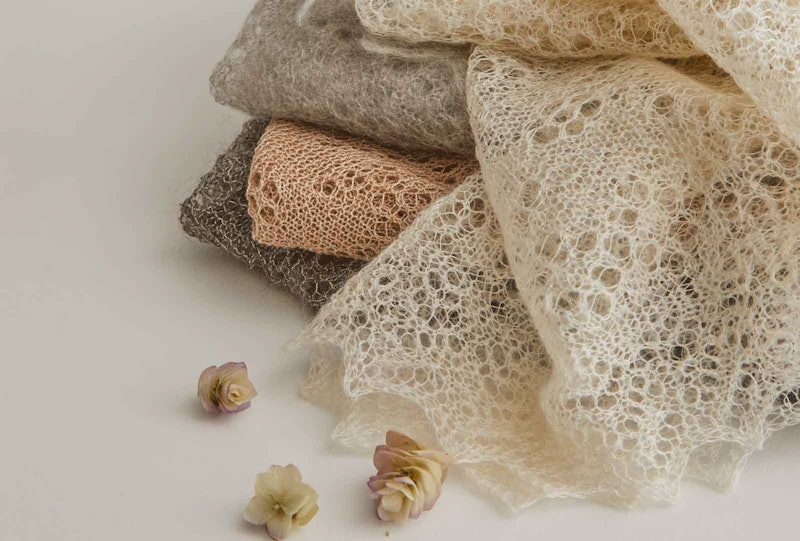
Explore the story of needlework with PieceWork magazine. These stories remain embedded in the everyday textiles found in our linen closets and in the artifacts on display in a museum, and each account is cherished just the same.
With the fall leaves as my visual inspiration, I chose a page from Weldon’s Practical Needlework that introduces Mountmellick embroidery and shows 20 ways to embroider leaves.
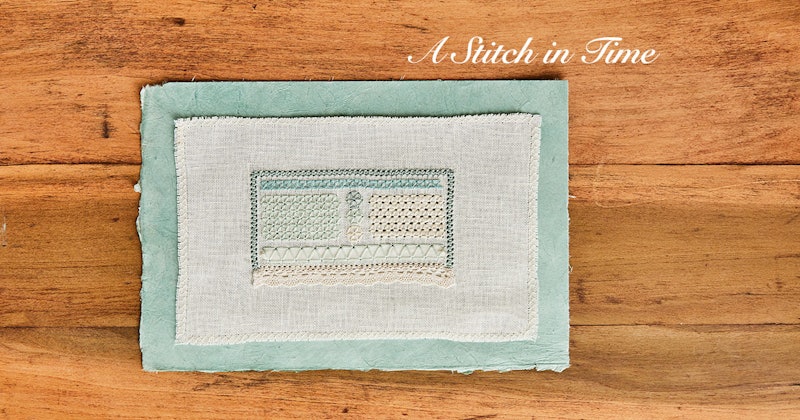
The three-sided stitch is a triangular, flat-line stitch, which can also be tightly pulled to create a lacy appearance. It is also known as the Turkish, Bermuda faggoting, lace, and point Turc stitch.
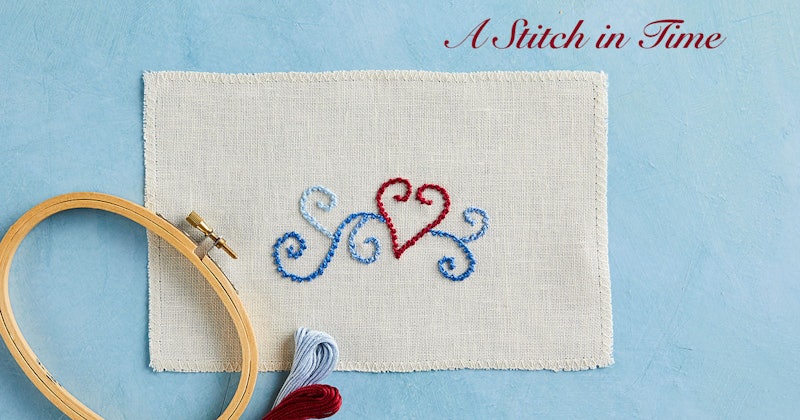
The scroll stitch, also known as the single-knotted-line or scroll-knot stitch, produces a lovely textured line, which flows evenly around curves.
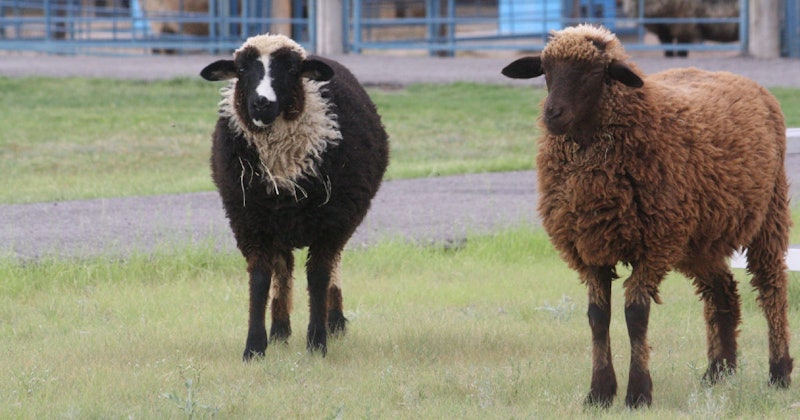
The New Mexico Farm and Ranch Heritage Museum in Las Cruces, New Mexico, is hosting its first Fiber Fiesta.

Included are the “Squirrel Sewing Bag” to stencil and sew, a “School Luncheon Table Mat” to cut from oilcloth, letters from “Aunt Priscilla” and “Uncle John,” and instructions for how to make your own knitting needles!
The velvet stitch, consisting of a cross-stitch and a loop, is a counted-thread stitch most often used in canvas work.